
If you want the direct answer, there is no single best AI SDR agent for every team. The right pick depends on whether you want a true autonomous outbound worker, a human-plus-AI sales engagement system, a lightweight AI assistant layered into your current process, or an email-first optimization tool.
For most B2B outbound teams, the strongest shortlist today includes Regie.ai, 11x, Artisan, Apollo AI, and Lavender, but they solve the problem in very different ways. Regie.ai stands out for teams that want AI agents inside a broader sales engagement workflow, 11x and Artisan lean harder into the “digital worker” model, Apollo AI is the most accessible choice for teams that want AI inside a huge prospecting platform, and Lavender is best viewed as an AI email and outreach optimization layer rather than a full autonomous SDR.
📋 Get Listed / Advertisement
We update this guide monthly. Want your tool featured? Contact: [email protected].
The bigger point is this: “AI SDR agent” has become a crowded label, which is why it helps to compare adjacent categories like AISO vs SEO, AEO, and GEO. Some vendors mean a fully autonomous outbound rep. Others mean a sequencing assistant, a research copilot, or an email writing coach. So if you buy based on category language alone, you can easily end up with the wrong tool.
This guide is built to help you avoid that, especially if your team is also comparing best AI competitive analysis tools for marketing before making stack decisions. First, we’ll compare the top options fast. Then we’ll break down who each one is actually for, where each tool fits, and how to choose one without wrecking your deliverability, process, or reporting.
Table of Contents
Best AI SDR Agents at a Glance
| Tool | Best for | Core strength | Main limitation |
|---|---|---|---|
| Regie.ai | Teams that want AI + human reps in one outbound workflow | AI prospecting agents plus broader sales engagement capabilities | Better fit for structured outbound teams than ultra-simple one-person setups |
| 11x | Teams that want an autonomous digital SDR model | 24/7 AI SDR worker with strong “autopilot” positioning | Less transparent public pricing on core pages |
| Artisan | Teams that want an AI SDR inside an all-in-one outbound platform | Ava automates outbound demand generation on Artisan’s platform | Best value depends on whether you want platform consolidation |
| Apollo AI | Teams that want AI inside a large prospecting database and outbound system | Natural-language prospecting, prioritization, and AI-assisted outbound inside Apollo | More “AI sales platform” than pure autonomous SDR agent |
| Lavender | Email-first teams that want better replies, not a full replacement rep | AI email coaching, optimization, and now automated email agent workflows | Not the best choice if you want a full multichannel SDR agent |
How To Evaluate the Best AI SDR Agents
To compare these tools properly, you need a framework. Otherwise every vendor just sounds like “AI-powered personalization at scale.”
Here are the six filters that matter most.
1. Autonomy
How much work does the tool actually do without heavy rep involvement? Can it research, prioritize, write, sequence, and follow up, or does it mainly assist a human? This matters because a tool that saves 10 minutes per rep per day is very different from one that can operate continuously across a defined segment.
2. Data and targeting
An AI SDR is only as good as the prospecting layer beneath it, which is the same reason many operators compare AI visibility tools for competitor benchmarking when evaluating performance gaps. Apollo emphasizes its large contact database and AI tied to prospect and engagement data, while 11x highlights a multi-source data approach in its competitive pages.
3. Personalization quality
Can the tool produce outreach that feels specific enough to earn replies? This is where many vendors overpromise. Personalization that looks personalized is not the same as messaging that is actually relevant.
4. Channel coverage
Some tools are email-first, which is why teams often pair this evaluation with broader thinking around AEO tools for AI Overviews. Regie.ai explicitly supports cross-channel engagement and social workflows, while 11x positions Alice as an always-on SDR across channels.
5. Reporting and control
The more autonomous the tool, the more important governance becomes, which is why teams also look at AI visibility platform showdowns before committing to a new system. You need to know what it is sending, to whom, under what rules, and with what outcomes. This is especially important for companies with brand, legal, or compliance constraints.
6. Pricing fit
The best tool is not the one with the flashiest demo, which is also a useful lens when reviewing best site audit tools. Some teams need a premium AI SDR because one meeting can be worth six figures. Others need lightweight assistance because the real problem is rep efficiency, not full automation.
📋 Get Listed / Advertisement
We update this guide monthly. Want your tool featured? Contact: [email protected].
1. Regie.ai
What it does
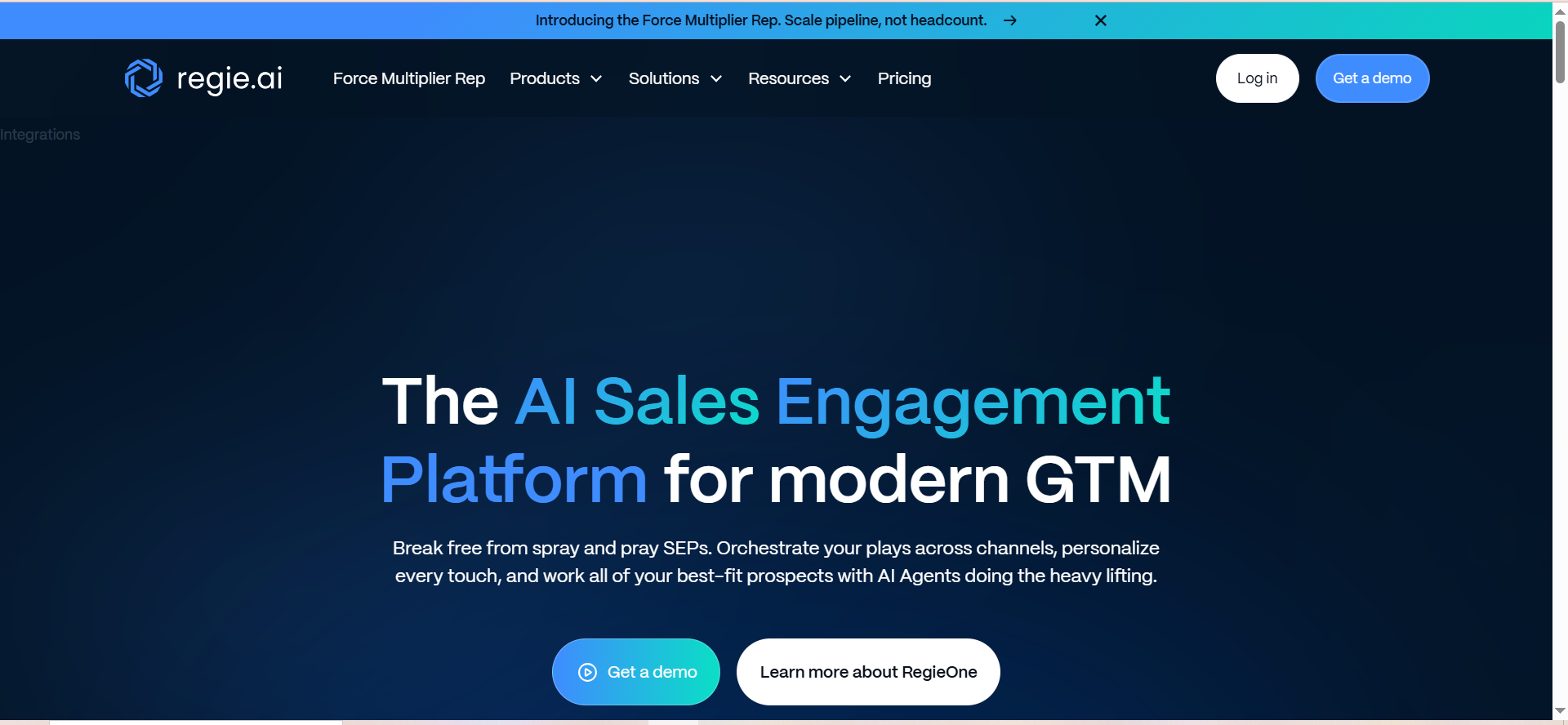
Regie.ai positions itself as an AI Sales Engagement Platform that brings human and AI-driven prospecting into one flow. Its messaging centers on orchestrating outbound plays across channels while AI agents do the heavy lifting on prospecting tasks. It also offers AI prospecting agents and public plan information for its AI SEP and Force Multiplier Rep products.
Why teams use it
Regie.ai makes the most sense for teams that do not want a black-box AI rep floating outside the rest of their outbound system, especially if they are already thinking about PR and brand messaging for AI visibility. Instead, it frames AI as part of a structured engagement workflow where humans and agents share the motion. That is a strong fit for organizations that already care about sequencing discipline, channel orchestration, and handoff logic.
Another reason it stands out is category clarity. Regie is not just saying “we help write better emails.” It is explicitly saying AI agents can expand prospecting coverage, warm leads, and hand conversations to reps when timing is right.
Best fit
Regie.ai is a strong fit for:
- B2B SaaS teams with an established outbound process
- Sales orgs that want human oversight, not full blind automation
- Teams that care about multichannel engagement
- Companies trying to consolidate sales engagement plus AI prospecting
Where it falls short
The main tradeoff is complexity. If you are a tiny team that just wants a very lightweight AI rep to run basic outbound with minimal setup, Regie may feel like more system than you need. Its value is highest when you actually want process, control, and coordination between human reps and AI workflows.
Pricing
Regie.ai’s pricing starts at $180 per user per month for AI SEP. Its higher-tier Force Multiplier Rep plan starts at $499 per user per month, and both plans are sold on annual contracts.
Free tier?
Regie.ai doesn’t publicly list a free tier. It appears to be sales-led, with demo-based access instead.
2. 11x
What it does
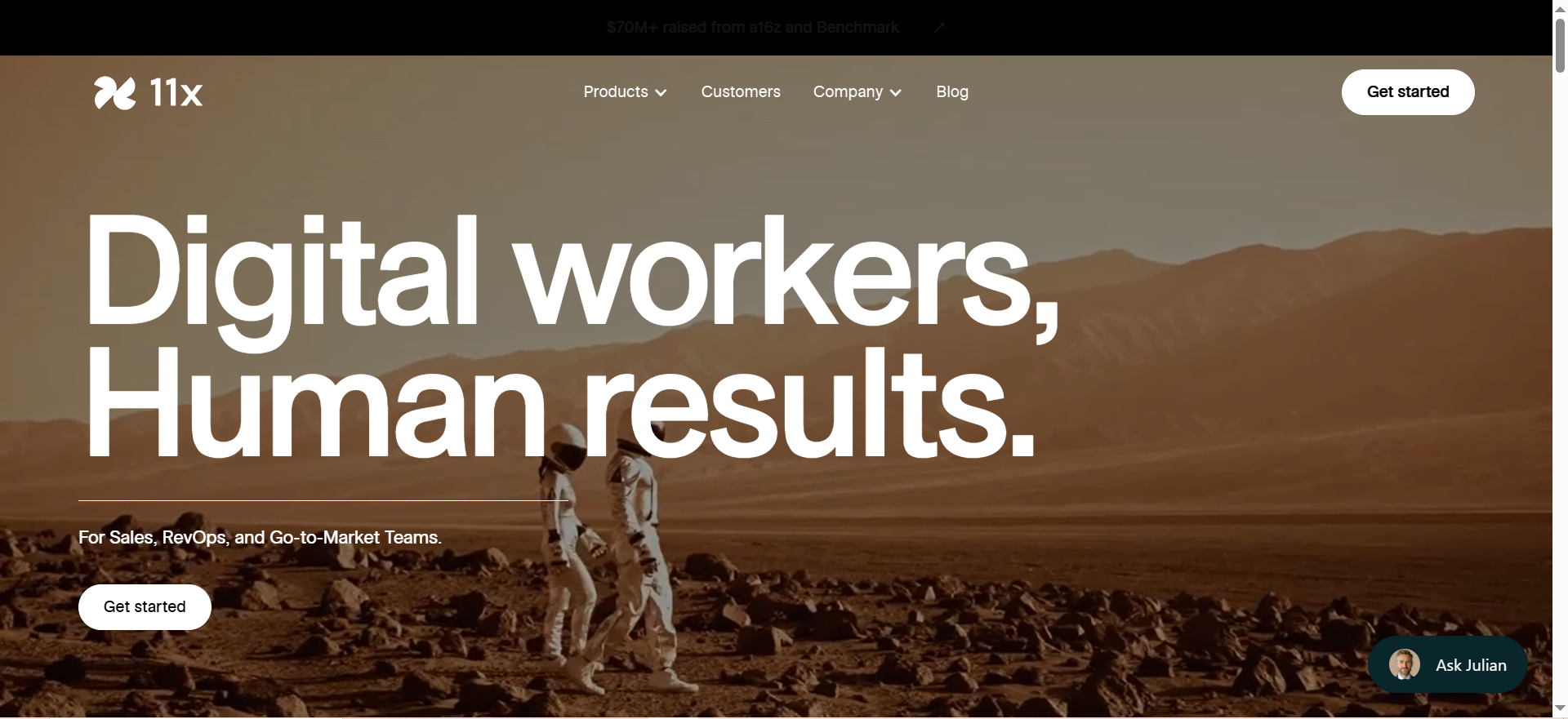
11x is one of the cleanest pure-play “AI SDR” stories in the market. Its core pitch is digital workers, and “Alice” is positioned as an AI-powered SDR that identifies buyers, engages decision-makers, and books meetings on autopilot. The brand’s whole positioning is built around the idea that you are not buying another sales tool. You are hiring an autonomous worker.
Why teams use it
Teams look at 11x when they want aggressive automation and category-native AI SDR positioning, which lines up with how buyers often compare AI content generator tools for SaaS. It is especially appealing to buyers who want to rethink sales capacity, not just add another productivity layer to current reps.
The attraction here is obvious, and that same “capacity versus tooling” tradeoff often shows up in comparisons like blog vs paid ads for SaaS growth.
Best fit
11x is best for:
- Growth-stage teams that want 24/7 prospecting coverage
- Leaders actively exploring AI labor leverage in outbound
- Organizations comfortable with autonomous workflow models
- Teams that care about scaling top-of-funnel activity without linearly scaling headcount
Where it falls short
The biggest issue for many buyers is evaluation clarity. Public-facing pricing is not as straightforward as some alternatives, and with products like this, real-world success depends heavily on targeting quality, messaging controls, and implementation fit. That does not make 11x weak. It just means you should push hard in demos on governance, reporting, ramp time, and failure modes.
Pricing
Pricing is not publicly listed; it’s available by quote. 11x uses a sales-led model rather than publishing standard self-serve plans.
Free tier?
11x doesn’t publicly list a free tier or free trial. It offers a demo / get-started flow instead.
3. Artisan
What it does
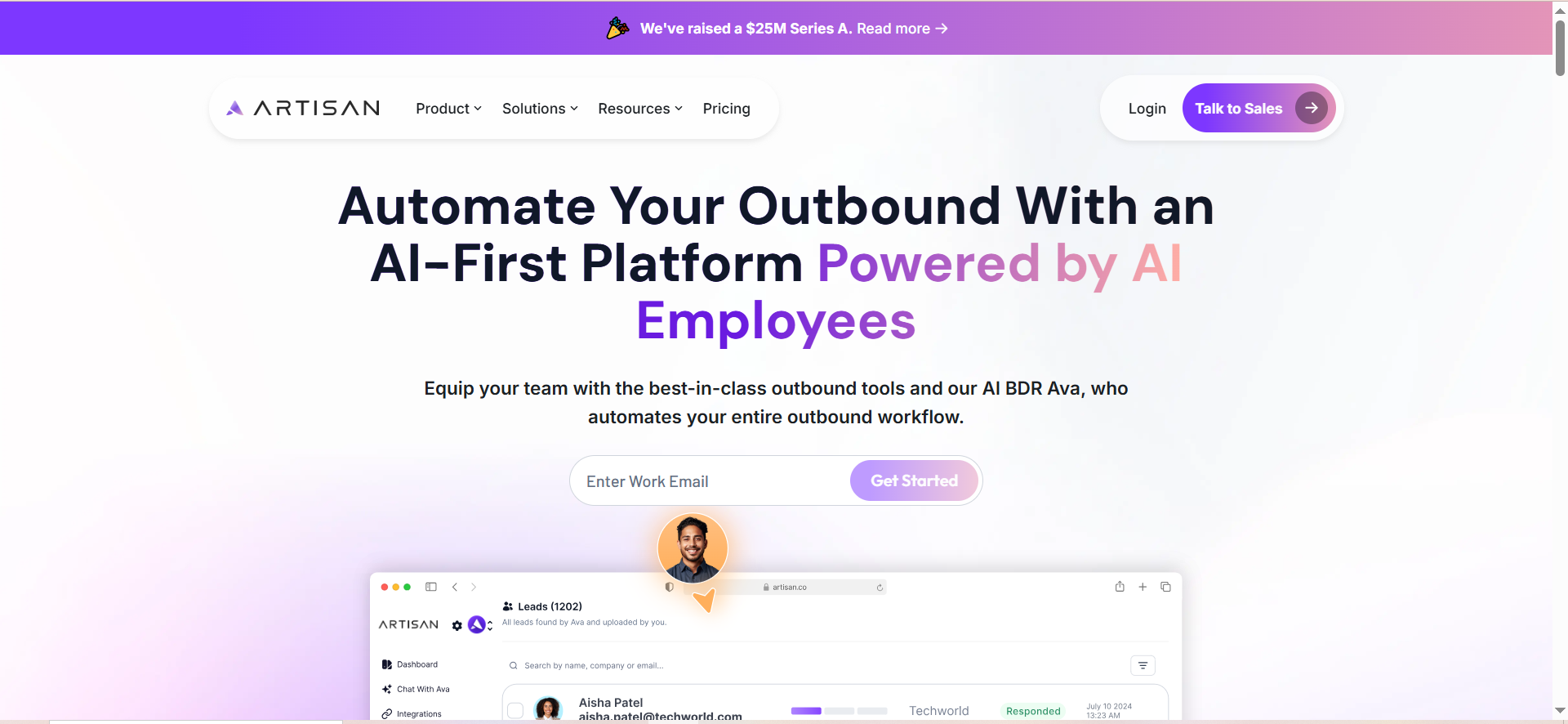
Artisan sells an AI-first outbound platform powered by AI employees, with Ava positioned as its AI BDR or AI sales agent. The company describes Ava as automating outbound demand generation and handling the outbound workflow inside Artisan’s broader platform.
Why teams use it
Artisan is attractive for one big reason: consolidation, which makes it relevant for teams looking at AI tools for marketing automation. A lot of outbound teams have built Frankenstein stacks across data vendors, sequencing tools, personalization tools, warmup tools, and workflow layers. Artisan’s pitch is that you can collapse much of that into one AI-first system.
That can be a real advantage if your current outbound motion is suffering from tool sprawl and too many handoffs, much like the problems covered in a content audit checklist for B2B SaaS. It can also help if you want an AI SDR but do not want to stitch together five other products to make it useful.
Best fit
Artisan is a strong fit for:
- Teams that want platform consolidation
- Companies buying into an AI-first outbound operating model
- Mid-market and growth teams that want more than just email drafting
- Operators who value having AI SDR capabilities inside a broader outbound system
Where it falls short
The tradeoff is platform commitment. If you prefer a modular stack and want the freedom to keep best-in-class point solutions in each layer, Artisan can feel opinionated. Its value is strongest when you actually want the consolidation story.
Pricing
Pricing is not publicly listed as a fixed starting plan. Artisan says pricing is based on the volume of leads you’re doing outreach to, so it’s effectively custom / quote-based.
Free tier?
Artisan doesn’t publicly list a free tier or free trial on its pricing page. It appears to be a sales-led product.
4. Apollo AI
What it does
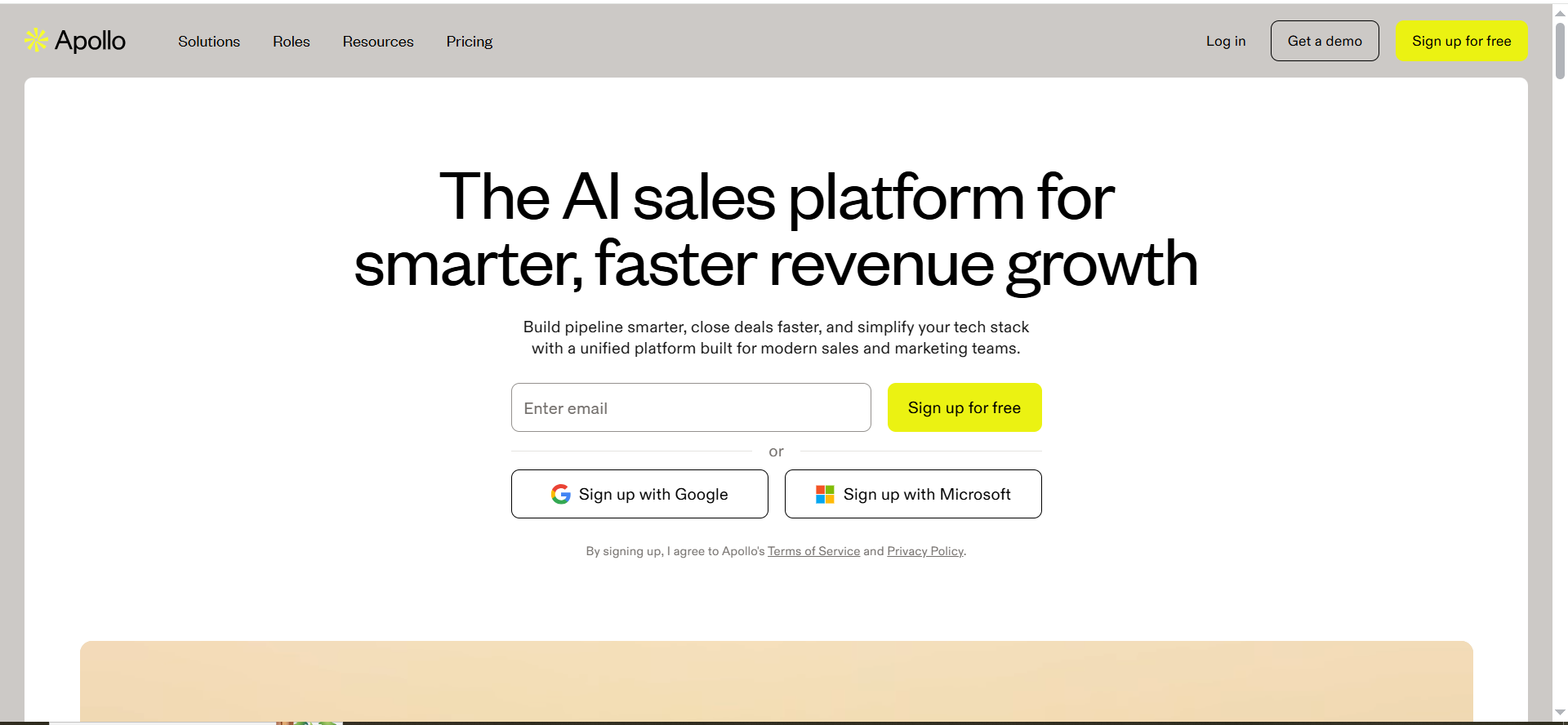
Apollo describes itself as an AI sales platform for prospecting, lead generation, and deal automation. Its AI layer is built into a broader platform that includes a large B2B database, account and contact search, workflows, sequences, and sales engagement functionality. Apollo AI is positioned to help users find decision-makers, discover lookalike accounts, generate lead lists with natural language, and prioritize leads using real-time web data.
Why teams use it
Apollo AI is the easiest recommendation for teams that want an AI SDR-like capability without buying a separate category-specific product, especially if they are already evaluating broader AI tools for lead generation. If you are already using Apollo for data and outbound, layering AI into that same environment can be simpler and cheaper than standing up a new platform.
This is why Apollo is often the most practical answer for smaller teams, especially for buyers also comparing best AI marketing tools for agencies. You get prospect data, workflows, sequencing, and AI assistance in one place. You may not get the same “AI employee” theater as 11x or Artisan, but you may get a better cost-to-output ratio.
Best fit
Apollo AI is best for:
- Startups and lean growth teams
- Companies already using Apollo
- Teams that want natural-language prospecting and prioritization
- Buyers who care about broad coverage more than pure autonomous SDR branding
Where it falls short
Apollo is broad, and that is both its strength and limitation. It is incredibly useful, but some buyers specifically want a higher-autonomy AI SDR product designed around agentic execution from day one. Apollo can support a lot of SDR work, but it is still best thought of as an AI-enhanced sales platform rather than a pure-play AI SDR agent.
Pricing
Apollo’s paid pricing starts at $49 per user per month. Apollo also offers higher paid tiers above that.
Free tier?
Apollo does offer a free tier. It also offers a 14-day free trial for eligible paid plans.
5. Lavender
What it does
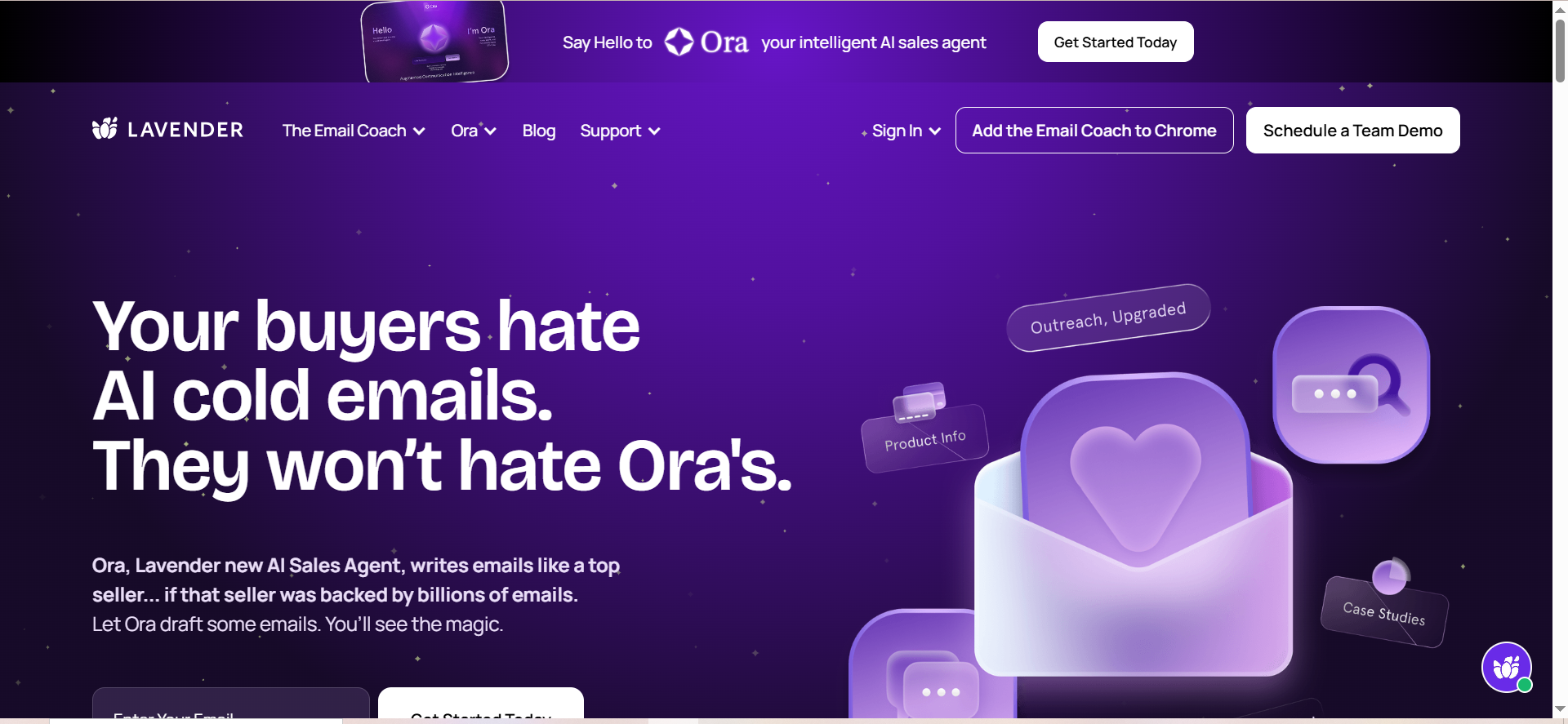
Lavender is best known as an AI sales email coach that helps sellers write better emails and get more replies. Its core message is around improving email quality, reply rates, and pipeline contribution. At the same time, Lavender has expanded into more autonomous territory with Ora, which it describes as an AI email agent that researches, writes, and sends personalized outreach automatically.
Why teams use it
Lavender is a smart pick when your team’s biggest outbound problem is not coverage, but message quality. A surprising number of SDR orgs already have enough activity, which is exactly why improving conversion through better messaging matters just as much as choosing the right AI tools for CRO. They just do not have enough good activity. In those cases, better personalization, clearer writing, and stronger email optimization can matter more than a fully autonomous AI SDR.
Lavender is also easier to adopt culturally because it can improve human reps before it tries to replace their workflow.
Best fit
Lavender is best for:
- Email-heavy SDR teams
- Teams with weak reply rates
- Organizations that want AI assistance without going all-in on automation
- Sales leaders who want to improve rep writing quality quickly
Where it falls short
If you want a full multichannel AI SDR running broad outbound on its own, Lavender is not the cleanest fit. Even with Ora expanding its capabilities, the brand’s deepest strength is still email coaching and optimization. That makes it valuable, but slightly different from the category’s most autonomous players.
Pricing
Lavender’s standard team pricing is not publicly listed; it’s demo-led. For Ora, Lavender publicly lists pricing at $500 per agent per month at launch.
Free tier?
Lavender does offer free access: its site says you can install the Coach for free and build in Ora for free. For teams, access is demo-led rather than a public free tier.
Which AI SDR Agent Is Best by Use Case
Best for all-in-one outbound execution: Regie.ai
Choose Regie.ai if you want AI prospecting agents inside a structured sales engagement workflow. It is the best blend of AI autonomy and human control in this list.
Best for autonomous digital worker model: 11x
Choose 11x if your team wants the clearest “hire an AI SDR” model. It is built around autonomy, always-on execution, and digital worker positioning.
Best for platform consolidation: Artisan
Choose Artisan if you are tired of stitching together too many outbound tools and want an AI SDR inside an all-in-one outbound platform, much like teams that want a cleaner programmatic SEO system.
Best for lean teams and accessible entry: Apollo AI
Choose Apollo AI if you want the broadest prospecting coverage and the easiest adoption path, especially if you already use Apollo or want a free-to-paid path, which is why it fits well alongside guides to best free SEO tools.
Best for email-first teams: Lavender
Choose Lavender if your outbound team already has enough volume but needs stronger reply quality, better copy, and smarter email optimization, which is also why teams often care about safe AI writing tools for SaaS SEO.
How to Choose an AI SDR Agent Without Creating a Mess
A lot of teams buy AI SDR software too early, or for the wrong reason. They assume the tool will fix outbound traffic. Usually it does not. It amplifies what is already there.
Start with your actual outbound bottleneck
Ask one question first: what is broken right now?
If your reps cannot build lists fast enough, you need better data and targeting, and that same mindset matters when building best SaaS keyword research workflows. If your outreach volume is low, you may need more automation. If your reply rates are weak, you may need better messaging. If your pipeline coverage is inconsistent across segments, you may need autonomous execution. Different tools solve different bottlenecks.
Define handoff rules before launch
The more autonomous the agent, the more important your human handoff rules become. Who steps in when a prospect replies? What signals trigger a human? What message types are allowed without review? What accounts should never be touched automatically?
Bad handoffs are where a lot of AI SDR programs go sideways.
Check deliverability and governance
This matters more than most demos admit, which is why teams that care about auditability often also look at best SEO reporting software. If the tool helps you send more messages but damages domain health or creates brand risk, it is not helping. You need clear controls, sending logic, reporting, and auditability.
Measure pipeline, not activity
Never buy on activity metrics alone, because “more qualified pipeline created at acceptable cost and acceptable brand risk” is the goal, a principle that also matters when fixing SaaS blog lead generation. “More emails sent” is not the goal. That means your evaluation should focus on:
- Positive reply rate
- Qualified meetings booked
- Opportunity creation
- Cost per qualified meeting
- Pipeline sourced
- Time saved per rep
- Handoff quality
📋 Get Listed / Advertisement
We update this guide monthly. Want your tool featured? Contact: [email protected].
What an AI SDR Agent Actually Does
An AI SDR agent is software designed to handle part or all of the top-of-funnel outbound workflow that would normally sit with an SDR, which is why adjacent topics like best voice AI for generating contact leads can be relevant for GTM teams. In practice, that can include prospect research, account prioritization, list building, personalization, first-touch outreach, follow-ups, channel sequencing, and sometimes even routing interest leads to a human rep. Regie.ai describes AI SDRs as tools that automate and streamline traditional prospecting work, while vendors like 11x and Artisan position their products more aggressively as digital workers or AI employees.
That sounds straightforward, but this is where buyers get tripped up, which is exactly why broader guides to AI tools that identify zero-click queries can also be useful.
AI SDR vs sales engagement platform
A sales engagement platform helps reps run outreach sequences, manage tasks, and coordinate channels, which overlaps with the broader workflow questions in AI strategic visibility. An AI SDR agent goes further by taking over more of the actual decisioning and execution. Regie.ai is a good example of the overlap: it presents itself as an AI sales engagement platform with AI agents doing prospecting-heavy work inside the system.
AI SDR vs workflow automation
Some tools automate workflows, but they still require humans to define lists, write messages, review every touch, and push the process along manually, which is why many teams also evaluate best SEO automation tools. A stronger AI SDR agent should be able to do more of the work autonomously, or at least dramatically shrink the amount of manual setup required.
AI SDR vs human SDR
An AI SDR is not a one-for-one substitute for a strong rep in every context, which is a useful mindset when thinking about best LLMs for business growth. It is best thought of as a leverage layer. It can handle repetitive, high-volume, rule-based top-of-funnel tasks very well. It is much less reliable when nuanced objection handling, creative messaging judgment, or high-context enterprise outreach is required. In other words, AI SDRs are strongest when they remove grunt work and extend coverage, not when they are expected to replace thoughtful human selling completely.
Are AI SDR Agents Worth It?
Yes, for the right use case.
They are worth it when your outbound process is constrained by repetitive work, inconsistent follow-up, weak research throughput, or too little coverage across your total addressable market. In those situations, AI SDR agents can add real leverage.
They are not worth it if your ICP is poorly defined, your offer is weak, your messaging is generic, or your data quality is bad. In that case, AI just helps you make mistakes faster.
The strongest teams use AI SDR agents the same way strong teams use any leverage tool. They keep humans in the highest-value moments and use automation to absorb the repetitive work that burns rep time without improving judgment.
Which AI SDR Platform Is Best for B2B SaaS?
The best AI SDR platform for B2B SaaS depends on your team size, outbound maturity, and how much automation you actually want. There is no single winner for every company, because different tools solve different parts of the SDR workflow.
For most B2B SaaS teams, the strongest shortlist today includes Regie.ai, 11x, Artisan, Apollo AI, and Lavender, but they solve the problem in very different ways. That makes it a good fit for companies that want AI to support outbound without completely removing human control. If your team already has a structured outbound process and wants to scale it with automation, Regie.ai is a strong choice.
If your company wants a more aggressive automation model, 11x and Artisan are better fits. These tools are positioned more like AI employees or autonomous SDRs than traditional sales software. They make sense for B2B SaaS teams that want to increase outbound coverage without scaling headcount linearly.
For leaner SaaS teams or startups that want to keep things practical, Apollo AI is often the easiest option to adopt, especially for companies comparing best AI marketing tools for small business. It gives you AI-assisted prospecting, targeting, and outreach inside a platform many SaaS teams already know. It may not feel like a dedicated AI SDR employee, but it can still handle a large portion of top-of-funnel work.
So if you want the short answer:
- Best overall for structured B2B SaaS outbound: Regie.ai
- Best for autonomous SDR execution: 11x
- Best for all-in-one AI-first outbound: Artisan
- Best practical option for lean SaaS teams: Apollo AI
The right answer comes down to whether you want an AI assistant, an AI-powered workflow, or a more autonomous digital SDR.
Are AI SDR Agents Better Than Human SDRs?
AI SDR agents are not universally better than human SDRs. They are better at some parts of the job and weaker at others.
Where AI SDR agents perform well is in repetitive, high-volume, process-driven work. They can research leads, build lists, write first-draft outreach, follow up consistently, and work across large prospect pools much faster than a human rep. They do not get tired, they do not forget follow-ups, and they can operate continuously. For teams struggling with rep bandwidth, that is a major advantage.
But human SDRs still outperform AI in areas that require judgment, nuance, and real-time adaptability. Strong reps are better at reading context, spotting when messaging should shift, handling objections, and building rapport in a way that feels natural. This matters a lot in complex sales cycles, enterprise outreach, and situations where one bad message can hurt the brand.
The better way to look at it is this: AI SDR agents are usually best at expanding capacity, while human SDRs are best at managing nuance, which is similar to how strong teams think about author expertise on a SaaS blog.
In most teams, the strongest model is not AI versus humans. It is AI plus humans.
AI can take over the repetitive top-of-funnel work:
- Prospect research
- Lead prioritization
- Initial outreach
- Follow-up sequences
- Data enrichment
- Basic personalization
Then human SDRs can step in for:
- Reply handling
- Objection management
- High-value accounts
- Strategic outreach
- Meeting qualification
- Relationship-building moments
So no, AI SDR agents are not simply “better” than human SDRs. They are better at automation-heavy tasks. Human SDRs are still better where judgment and trust matter most.
Which AI SDR Tool Is Best for Email Outreach?
If email outreach is your main priority, Lavender is one of the best tools to consider.
That is because Lavender’s biggest strength has always been email performance. It is designed to help sellers write clearer, more personalized, and more effective outbound emails. For teams that already have enough activity but struggle with low reply rates, this can be more useful than a fully autonomous SDR tool.
Lavender is especially useful when the core problem is not prospect volume, but messaging quality. A lot of outbound teams are not failing because they are sending too few emails. They are failing because the emails are generic, too long, too vague, or poorly targeted. Lavender helps fix that.
That said, if you want email outreach as part of a broader AI SDR workflow, Regie.ai is also a strong option. It supports multichannel engagement and fits teams that want email plus prospecting plus workflow orchestration in one system.
Apollo AI can also work well for email outreach, especially for lean teams that want prospecting and outreach in one platform. It is not as email-specialized as Lavender, but it is practical and broad.
So the best choice depends on what you mean by “best for email outreach”:
- Best for improving email quality and reply rates: Lavender
- Best for email inside a broader outbound workflow: Regie.ai
- Best practical all-in-one option for smaller teams: Apollo AI
If email performance is the real bottleneck, Lavender is the clearest answer, especially for teams also exploring best AI paraphrasing tools for SaaS. If email is just one piece of a larger outbound system, Regie.ai or Apollo AI may make more sense.
Which AI SDR Tool Is Best for Prospecting and Personalization?
If you are specifically looking for the best AI SDR tool for prospecting and personalization, the answer usually comes down to Regie.ai or Apollo AI, depending on how your team works, especially if you are also comparing AI tools for personalization in marketing.
Regie.ai is a strong pick for teams that want AI-powered prospecting inside a more structured outbound workflow. It is useful when you want research, outreach, sequencing, and human handoff to work together. This makes it a solid choice for teams that care not just about finding prospects, but about reaching them with more relevant messaging.
Apollo AI is especially strong if data access and prospect discovery are high priorities. It has a large prospecting database and supports AI-assisted search, account targeting, and lead prioritization. That makes it very practical for teams that need to identify the right accounts and contacts quickly.
If your focus is on high-volume outbound with autonomous execution, 11x and Artisan also belong in the conversation. They aim to combine prospecting and personalization at scale, but they are more aligned with a digital worker model than with a human-guided workflow.
Here is the easiest way to think about it:
- Best for structured prospecting + personalization workflows: Regie.ai
- Best for data-rich prospecting and lead discovery: Apollo AI
- Best for autonomous prospecting at scale: 11x
- Best for AI-led outbound in an all-in-one platform: Artisan
The important thing is not just whether the tool can be personalized, which is why adjacent comparisons like Writesonic vs Jasper for SaaS teams can also be useful. Most tools can generate something that looks personalized. What matters is whether the personalization is actually relevant enough to earn replies.
That is why teams should evaluate:
- Targeting accuracy
- Data quality
- Relevance of message outputs
- Consistency across segments
- How much human review is still required
The best tool is the one that helps you find the right prospects and say something useful to them, not just the one that inserts a few dynamic variables into an email.
Which AI SDR Works Best for Startups?
For most startups, Apollo AI is usually the best place to start, especially for teams still deciding whether a SaaS blog is worth it as part of a broader growth mix.
That is not because it is the flashiest AI SDR platform, but because startups usually need something practical, flexible, and cost-conscious, much like buyers looking at best cheap SEO tools. Apollo AI gives early-stage teams a combination of prospect data, lead generation, targeting, and outreach support inside one platform, which is why it fits naturally alongside broader guides to best AI tools for digital marketing. That can be much easier to adopt than a more premium or fully autonomous AI SDR setup.
Startups often do not need a complex AI SDR employee on day one, which is the same kind of staged decision-making covered in a Series A SaaS content marketing budget. They usually need:
- Faster list building
- Better lead targeting
- More efficient outbound
- Lower manual workload
- One system that covers multiple needs
Apollo AI fits that reality well.
That said, a startup with a strong outbound motion and a clear ICP could also consider 11x or Artisan if it wants to push harder on automation and reduce dependence on SDR headcount. Those tools make more sense when the company is ready to run a more AI-first outbound model.
Lavender is also a strong startup tool if the team is already doing outreach but needs help improving email quality and reply rates.
So the startup breakdown looks like this:
- Best overall for most startups: Apollo AI
- Best for startups going AI-first in outbound: 11x or Artisan
- Best for startups focused on better email performance: Lavender
For early-stage teams, the real question is not “What is the smartest AI SDR?” It is “What tool helps us create a pipeline without adding unnecessary complexity?” That is why Apollo AI is often the safest and most practical answer.
Which AI SDR Works Best for Enterprise Teams?
For enterprise teams, Regie.ai is often the best fit because enterprise outbound usually requires more control, structure, and coordination between AI workflows and human reps.
Large sales organizations do not just need automation; they need governance, which is why this conversation overlaps with product-led CRO content for teams trying to turn pipeline efficiency into actual revenue. They need governance. They need visibility into messaging, handoffs, sequencing, permissions, reporting, and process consistency across teams. Regie.ai makes sense here because it sits closer to a controlled outbound system rather than a purely black-box AI rep model.
Enterprise teams may also look at 11x and Artisan, especially if they want to test a more autonomous digital worker approach. These tools are attractive for companies that want to expand outbound capacity aggressively. But enterprise buyers will usually need to evaluate them carefully around control, compliance, and brand safety.
Apollo AI can still be valuable in enterprise environments, especially for data-rich prospecting and large-scale lead generation, but some enterprises may want deeper workflow control than a broad sales platform naturally offers.
Enterprise teams should usually prioritize:
- Workflow governance
- Human approval rules
- Data security and control
- Reporting depth
- Role-based access and oversight
- Consistent messaging across segments
That is why the best enterprise fit is usually:
- Best for structured enterprise outbound: Regie.ai
- Best for enterprise teams testing autonomous AI SDRs: 11x or Artisan
- Best for enterprise prospecting scale: Apollo AI
For most enterprise teams, the best AI SDR is not the one that automates the most; it is the one that automates safely while still fitting existing sales operations, which is also the logic behind choosing a B2B SaaS SEO agency with the right process controls.
Do AI SDR Agents Handle LinkedIn and Email?
Yes, many AI SDR agents can handle both LinkedIn and email, but not all of them do it in the same way.
Some tools are built for broader multichannel outbound, while others are much more email-focused. That difference matters because “AI SDR” is often used too broadly.
Regie.ai is one of the stronger options for teams that want multichannel execution. It is designed to support broader sales engagement workflows, which makes it more suitable for teams that want AI-supported outreach beyond just email.
11x and Artisan are also often positioned as broader outbound automation systems rather than simple email tools. Their value comes from automating larger parts of the SDR process, which can include multiple channels depending on the workflow.
Lavender, on the other hand, is much more email-centered. It is excellent for improving email outreach, but it is not the first tool you would choose if LinkedIn execution is a major requirement.
Apollo AI sits somewhere in the middle. It supports broader outbound workflows inside the Apollo ecosystem, but teams should still evaluate exactly how much channel automation they need versus how much manual execution they are comfortable keeping.
So the short answer is:
- Best for multichannel AI SDR workflows: Regie.ai
- Strong autonomous multichannel options: 11x and Artisan
- Best for email-first use cases: Lavender
- Practical broader outbound option: Apollo AI
If LinkedIn and email are both important to your SDR strategy, make sure you do not buy an “AI SDR” that is really just an email assistant with better branding, especially if you are already mapping a broader keyword research strategy for SaaS.
Which AI SDR Has the Best Data and Lead Research?
If your top priority is data and lead research, Apollo AI is usually the strongest answer for teams already reviewing AI tools for marketing research.
That is because Apollo’s biggest advantage is not just AI. It is the combination of AI with a large prospecting and contact database. This gives teams a practical way to find accounts, identify decision-makers, build lists, and prioritize leads inside the same environment where they run outreach. For companies that care heavily about prospect discovery and scale, that is a major advantage.
This does not mean Apollo AI is the best in every category. But when the question is specifically about data depth and lead research, Apollo stands out because the platform is built around prospecting at scale.
Regie.ai is also strong for prospecting workflows, especially when research needs to feed directly into outbound plays and human-plus-AI execution. But Apollo generally has the edge when buyers care most about broad lead discovery and database-driven prospecting.
11x and Artisan can also support lead research, but they are more often evaluated for autonomous execution rather than for being the strongest standalone data research layer.
The easiest breakdown is:
- Best for data and lead research: Apollo AI
- Best for turning research into structured outbound workflows: Regie.ai
- Best for autonomous execution after targeting is defined: 11x and Artisan
When choosing an AI SDR for data and lead research, focus on:
- Contact and account coverage
- Data quality
- Search flexibility
- Intent or signal depth
- Lead prioritization
- How easily research connects to execution, which is the same kind of discipline used in how to perform a content audit.
The best data layer is the one that helps your team find the right buyers and act on that information quickly, which is the same logic behind choosing the right AI marketing stack.
FAQs
An AI SDR agent is software that automates parts of sales development work, such as prospect research, list building, personalization, outreach, and follow-up, which makes it a practical example of AI in marketing. Some tools act like assistants for human reps, while others are positioned as autonomous digital workers.
For most B2B SaaS teams, Regie.ai is one of the strongest options because it combines AI prospecting with a broader sales engagement workflow, which is exactly the kind of stack decision covered in guides to best AI tools for enterprise SaaS marketing. Teams that want a more autonomous “AI employee” model may prefer 11x or Artisan instead.
Not across the board. AI SDR agents are better at repetitive, scalable, rule-based work. Human SDRs are still better at nuanced messaging, judgment, objection handling, and strategic account work. The best setup is usually a combination of both, which is similar to how teams think about content engineers driving AI search visibility.
Apollo AI can do a large amount of SDR work, especially around prospecting, prioritization, and AI-assisted outreach, but it is better described as an AI-enhanced sales platform than a pure-play autonomous AI SDR agent, much like other AI marketing use cases and examples.
Lavender’s strongest identity is still as an AI email coach, though its Ora product pushes further into automated outbound execution, which makes related comparisons like best Jasper alternatives relevant for teams evaluating writing tools. It is a strong fit for teams focused on better replies and email quality, but not the first pick for buyers who want a full multichannel SDR agent.
Pricing varies a lot. Regie.ai publicly lists plans from $180/user/month and $499/user/month on annual terms, Ora by Lavender is listed at $500 per agent/month at launch, Apollo has a free entry point, and vendors like 11x and Artisan are more sales-led in pricing presentation.
They can be, especially if a startup needs more outbound coverage without immediately adding headcount, which is part of the reason teams keep looking at fresh AI marketing statistics before making stack decisions. Apollo AI is often a practical starting point, while more autonomous products make sense when the team has a clear ICP, clean data, and enough outbound discipline to support automation.
Ask what the tool does autonomously, what requires human approval, how it handles personalization, what data sources it uses, how it protects deliverability, how reporting works, and what a clean handoff to human reps looks like, because the same evaluation mindset helps when planning an answer engine optimization strategy. Those answers matter more than flashy “AI” language.
Final Verdict
If you want the simplest takeaway, here it is:
- Best overall for most structured outbound teams: Regie.ai
- Best pure-play autonomous AI SDR model: 11x
- Best for all-in-one outbound consolidation: Artisan
- Best practical choice for lean teams: Apollo AI
- Best for email-first optimization: Lavender
So, what is the best AI SDR agent?
For most companies, the real answer is not “the most autonomous one.” It is the one that fits your motion.A good AI SDR should extend your outbound system, not create a second one, which is also the logic behind choosing the right content audit consultant. It should make reps sharper, increase coverage, improve speed, and create a more qualified pipeline without turning your brand voice into robotic mush.
If your team wants AI plus process, start with Regie.ai, especially if you are already thinking about a more structured SaaS SEO agency approach to growth. If you want a digital worker model, look hard at 11x. If you want consolidation, evaluate Artisan. If you want the easiest broad-platform option, Apollo AI is hard to ignore. If your main issue is email performance, Lavender is still one of the smartest buys in the category, especially for teams also reviewing best Clearscope alternatives.
The teams that win with AI SDR agents are not the ones chasing hype, and that same discipline applies when building a stronger lifecycle content strategy. They are the ones buying with clear constraints, clear handoffs, and a clear definition of what “better outbound” actually means.
📋 Get Listed / Advertisement
We update this guide monthly. Want your tool featured? Contact: [email protected].