

A 2026 Pew Research Center analysis of 68,879 Google searches found users click a traditional result in just 8% of visits when an AI summary appears, versus 15% without one. The right Ahrefs alternative in 2026 is no longer the one with the biggest backlink index. It is the one that helps you win rankings and AI answers at a price you can actually justify.
Ahrefs is still an excellent SEO platform. It is also more expensive than it used to be, meters usage through report credits, and competes in a market where AI visibility, meaning your presence in ChatGPT, Perplexity, and Google AI Overviews, now decides a growing share of discovery.
If your budget, workflow, or AI search strategy has outgrown what Ahrefs gives you per dollar, five alternatives cover the entire spectrum in 2026, namely Semrush, Moz Pro, Mangools (KWFinder), Ubersuggest, and the free Google stack of Search Console, Analytics, and Keyword Planner.
This guide compares all five on features, verified 2026 pricing, AI visibility coverage, and the specific team each one fits, then walks through how to choose and how to migrate without losing your data.
▶️ If your ranked pages are not showing up in AI answers and you want a content system that fixes that, book a SaaS content strategy call.
Best Ahrefs Alternatives: The 2026 Verdict
Semrush is the best all-around Ahrefs replacement in 2026 for teams that need SEO, PPC, competitor intelligence, and AI visibility tracking in one login. Moz Pro is the easiest switch for beginners, Mangools is the best budget keyword research suite, Ubersuggest is the cheapest paid entry point with a rare lifetime deal, and GSC + GA4 + Keyword Planner remains the only genuinely free stack built on first-party data.
The one-line match by situation:
- Best all-around replacement: Semrush covers keyword research, backlinks, site audits, PPC intel, and an AI Visibility Toolkit under one roof, which is why it anchors most serious B2B SaaS tool stacks.
- Best for beginners: Moz Pro pairs a clean interface with page-level "do this next" guidance, starting at $49 per month.
- Best for keyword-led content teams: Mangools delivers the most intuitive keyword research workflow in the category from $29.90 per month on annual billing.
- Best low-cost starter: Ubersuggest covers keywords, audits, and rank tracking from $29 per month, with lifetime licenses from $290.
- Best free option: GSC + GA4 + Keyword Planner gives you the only data Google itself reports about your site, at zero cost.
Every option above is evaluated in depth below, including where each one loses to Ahrefs, because an honest comparison is the only kind worth ranking or citing.
Ahrefs Alternatives Compared: Features, Pricing, and AI Visibility
The comparison below covers all five alternatives on starting price, standout capability, AI visibility coverage, and best-fit team, with pricing verified in 2026. Deeper per-tool breakdowns follow in the dedicated sections.
| Tool | Best For | Standout Capability | Starting Price (2026) | AI Visibility Coverage |
|---|---|---|---|---|
| Semrush | All-around Ahrefs replacement | SEO + PPC + competitor intel + AI Visibility Toolkit | $139.95/mo (Pro) | Dedicated AI Visibility Toolkit; Semrush One bundle from $199/mo |
| Moz Pro | Beginners and small teams | Page-level optimization guidance, clean UI | $49/mo (Starter) | Search visibility scoring; no dedicated LLM tracking |
| SE Ranking | Agencies and in-house B2B SaaS teams | Full SEO suite on plan-based limits, not report credits | $129/mo (Core) | SE Visible (standalone) tracks mentions & citations across AI Overviews, AI Mode, ChatGPT, Gemini, Perplexity. |
| Ubersuggest | Budget-first starters | Core SEO suite with lifetime license option | $29/mo or $290 lifetime | Basic; no dedicated LLM answer tracking |
| GSC + GA4 + Keyword Planner | Zero-budget teams | First-party Google performance data | Free | None natively; pair with an AI visibility tool |
Ahrefs itself, for reference, starts at $129 per month on Lite with credit-metered usage. Every alternative above either undercuts that price, adds a capability Ahrefs lacks, or both.
1. Semrush: Best All-Around Ahrefs Alternative for SEO Plus AI Visibility
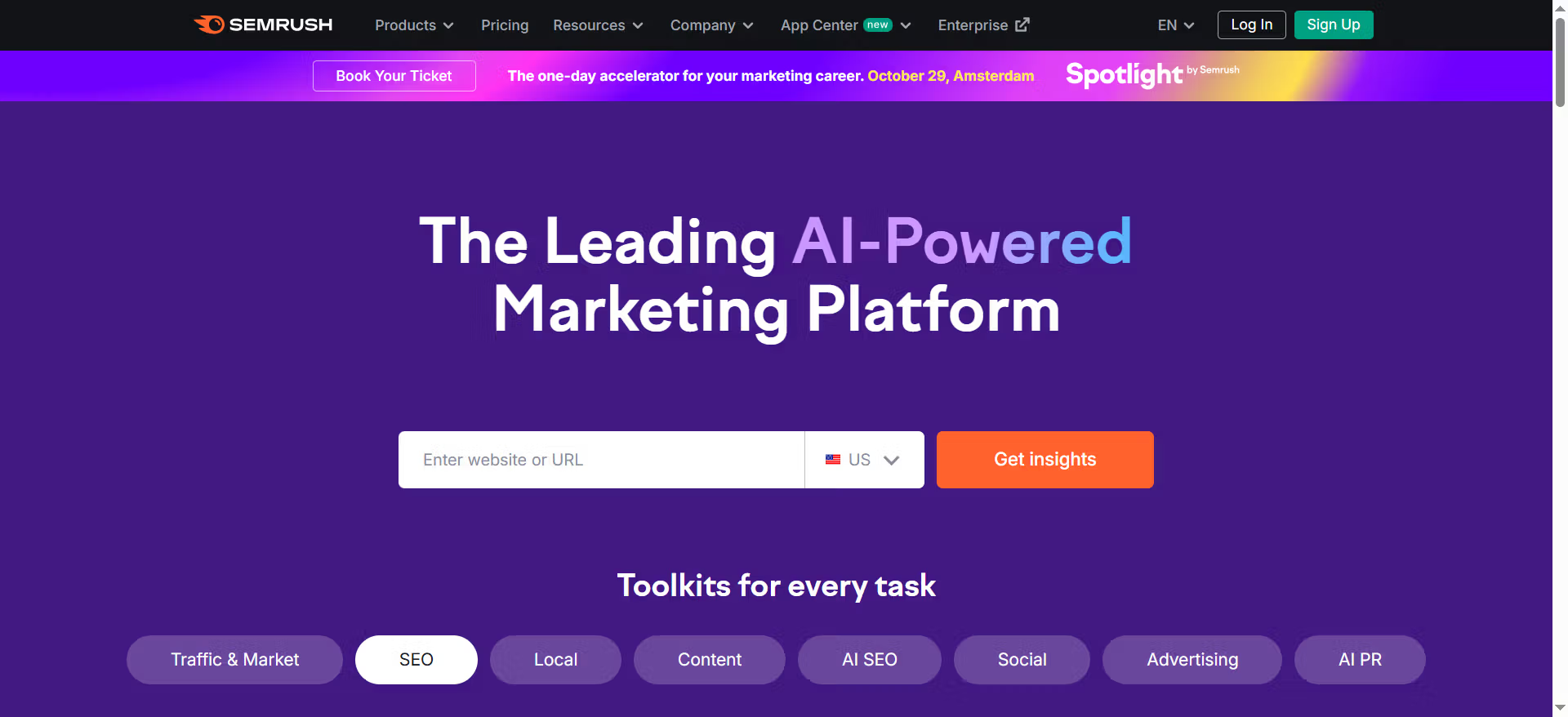
Best for: Agencies and B2B SaaS marketing teams that want SEO, PPC, competitor research, and AI visibility tracking consolidated in one platform.
Where it shines vs Ahrefs: Semrush wins on breadth and predictability. You get five dedicated competitor analysis tools, paid search intelligence Ahrefs barely touches, and a native AI Visibility Toolkit instead of a separately priced add-on. Just as important for budgeting, Semrush meters usage through plan limits rather than report credits, so a heavy research week never locks your data mid-month.
What it is: Semrush is a full digital marketing suite covering keyword research, backlink analysis, technical audits, rank tracking, advertising intelligence, and content tooling. It is the most direct like-for-like Ahrefs replacement on this list, and in 2026 it is also the most consequential one strategically. Adobe agreed to acquire Semrush in an all-cash deal valued at approximately $1.9 billion, as reported by Search Engine Journal, a signal of how central search and AI visibility data has become to enterprise marketing stacks.
Key features:
- Competitor Research Depth: Semrush ships five dedicated competitor analysis tools, including Keyword Gap, Backlink Gap, and Market Explorer, which is where Zapier's testing found it pushes ahead of Ahrefs.
- AI Visibility Toolkit: Semrush One bundles the classic SEO toolkit with AI visibility tracking from $199 per month, letting you monitor how your brand appears in LLM answers alongside rankings, per Backlinko's 2026 analysis. We use this exact workflow in our guide to tracking brand visibility in ChatGPT.
- Keyword Magic Tool: the keyword engine groups suggestions by topic and intent, feeding directly into content briefs.
- Position Tracking: daily rank updates with SERP feature tracking, including AI Overview presence for tracked keywords.
- Content Toolkit: briefs, optimization scoring, and topic research that shorten the path from keyword to publish-ready draft, a workflow we pair with the stack in our best AI content optimization tools guide.
Pricing (2026, verified): Per G2's Semrush pricing listing, Pro runs $139.95 per month, Guru $249.95, and Business $499.95, with roughly 17% off on annual billing.
| Semrush Plan | Monthly Price | Effective Annual Price | Fits |
|---|---|---|---|
| Pro | $139.95/mo | ~$117.33/mo | Solo marketers, early-stage SaaS |
| Guru | $249.95/mo | ~$208.33/mo | Content-led teams needing historical data |
| Business | $499.95/mo | ~$416.66/mo | Agencies needing API access and high limits |
| Semrush One Starter | $199/mo | Varies by term | Teams adding AI visibility to classic SEO |
Pros: Broadest feature coverage of any Ahrefs alternative, strongest paid search intelligence, native AI visibility tracking, deep competitor tooling.
Cons: It is not cheaper than Ahrefs at comparable tiers, the interface is dense for first-time users, and some competitive traffic datasets sit behind add-ons.
When to choose it: Pick Semrush when you are replacing Ahrefs with something more capable rather than something cheaper, especially if AI answer visibility is on your 2026 roadmap. Start with a trial before committing to a tier: try Semrush here.
2. Moz Pro: Best Ahrefs Alternative for Beginners and Small Teams
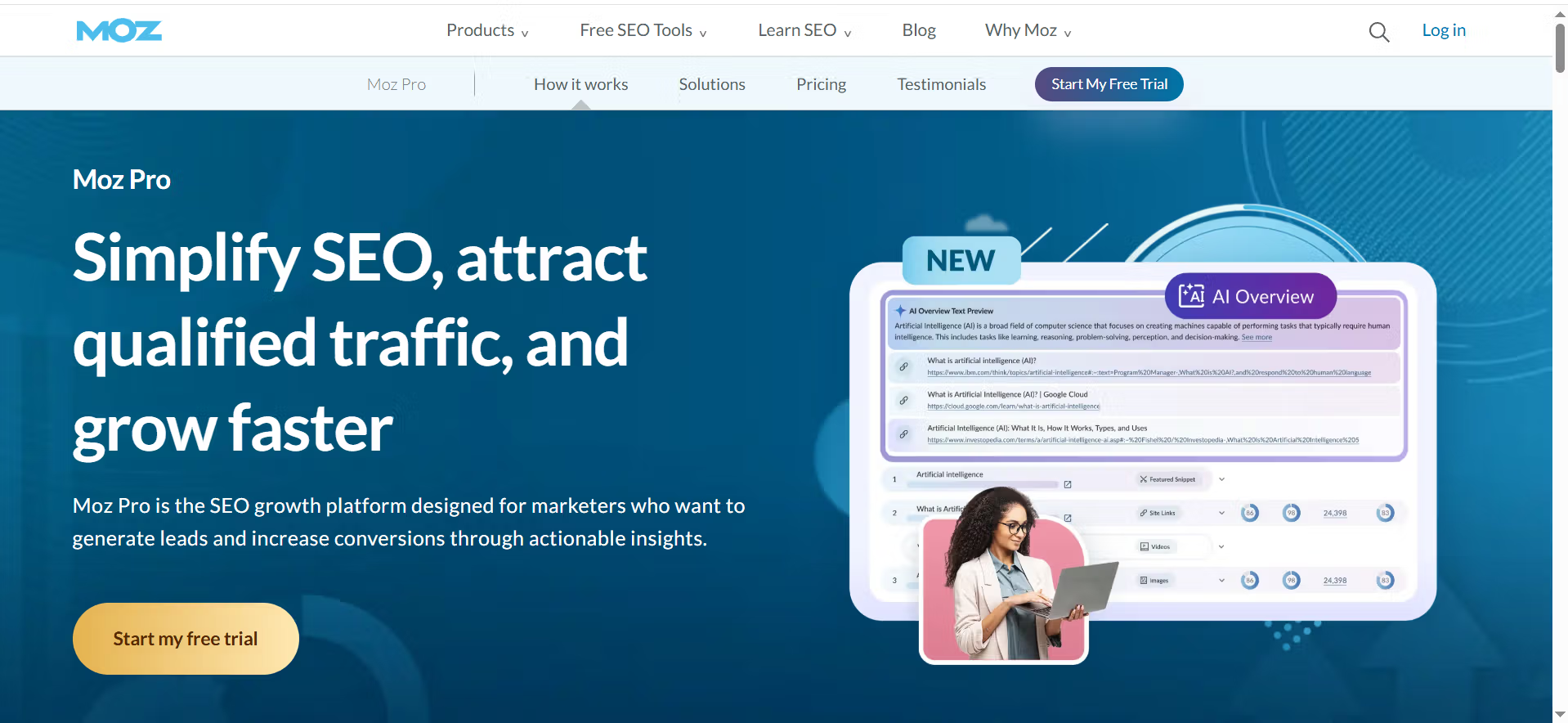
Best for: Bloggers, small in-house teams, and marketers running their first structured SEO program.
Where it shines vs Ahrefs: Moz Pro wins on approachability and prescriptive guidance. Where Ahrefs hands you raw data and assumes expertise, Moz translates crawl and ranking data into a prioritized "fix this next" list a non-specialist can act on the same day. The $49 entry point also undercuts Ahrefs Lite by $80 per month, with no credit meter to watch.
What it is: Moz Pro is a long-established SEO suite known for its proprietary Domain Authority metric, clean interface, and practical on-page recommendations. Where Ahrefs assumes you know what to do with raw data, Moz tells you what to fix next.
Key features:
- Page Optimization Guidance: Moz Pro scores individual pages and returns prioritized fixes for titles, headings, and internal links, which makes first wins straightforward for non-specialists.
- Ease of Use: Moz Pro holds an 8.6 out of 10 ease-of-use rating from over 500 reviewers on G2's comparison data, one of the strongest usability scores in the category.
- Site Crawl: the crawler surfaces duplicate content, broken links, and crawl issues with plain-language explanations of why each matters.
- Keyword Explorer: keyword research with difficulty scoring and SERP analysis, calibrated for realistic small-site targeting.
- Domain Authority: the DA metric remains a widely used shorthand for link equity in outreach and reporting, useful when you run link building campaigns.
Pricing (2026, verified): Per Tekpon's verified pricing breakdown, Starter runs $49 per month with annual billing dropping it to $39, and the Medium tier lands at $143 per month annually.
| Moz Pro Plan | Monthly Price | Annual Effective Price | Fits |
|---|---|---|---|
| Starter | $49/mo | $39/mo | One site, solo operators |
| Standard | $99/mo | ~$79/mo | Small teams starting structured SEO |
| Medium | $179/mo | ~$143/mo | Content teams tracking at volume |
Pros: Gentlest learning curve on this list, actionable page-level guidance, strong educational resources, credible link metrics.
Cons: Data depth trails Semrush and Ahrefs for advanced competitive research, no dedicated LLM answer tracking, and power users tend to outgrow it within a year or two.
When to choose it: Pick Moz Pro when your bottleneck is knowing what to do next rather than accessing more data. Teams maturing past it usually add a specialist tool rather than replacing it outright.
3. SE Ranking: Best Ahrefs Alternative for SEO Plus Standalone AI Tracking
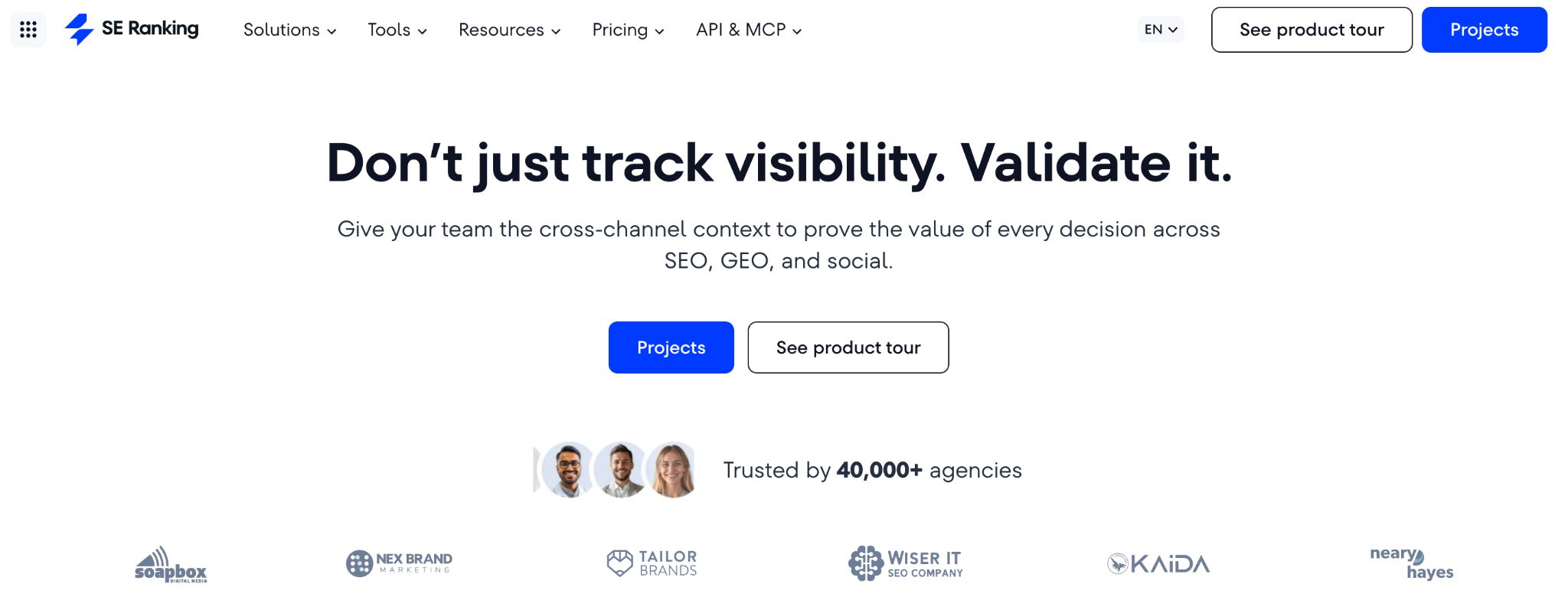
Best for: Agencies and in-house B2B SaaS teams that want rank tracking, keyword research, backlinks, audits, and competitor analysis in one SEO platform, and want to measure AI-answer visibility alongside it.
Where it shines vs Ahrefs: Ahrefs remains the reference point for link data, and nothing here changes that. Where SE Ranking takes a different route is scope. The platform runs the full SEO workflow on plan-based limits instead of report credits, so a heavy research week never locks your reports mid-cycle.
What it is: SE Ranking is an SEO platform built for agencies and marketing teams, spanning rank tracking, keyword research, backlink analysis, technical audits, on-page SEO, competitive research, content tooling, local marketing, and agency reporting. Dedicated AI-answer visibility (brand mentions, citations, and sentiment across AI engines) lives in SE Visible, a separate AI visibility platform by SE Ranking. Run together, they give you a fuller read on your brand in both Google and AI answers.
Key features:
- Rank tracking: Daily desktop and mobile positions across Google, Bing, and YouTube, with local checks, historical data, competitor SERP analysis, and AI Overview presence.
- Keyword & competitive research: Keyword overview, difficulty, intent, and volume, plus competitor analysis spanning SEO and PPC.
- Backlink analysis: Domain and Page Trust scores, backlink toxicity scoring, and new/lost referring-domain tracking.
- Website audit: Automated crawl running 115+ checks with a health score, severity grouping, and fix guidance; JavaScript rendering included.
- AI-answer visibility via SE Visible: A standalone AI-visibility platform tracking brand mentions, citations, and sentiment across AI Overviews, AI Mode, ChatGPT, Gemini, and Perplexity, with competitor benchmarking and cited-source intelligence.
- API and MCP Included in Every Plan: pull rankings, keywords, backlinks and more into BI dashboards, or query them in plain language inside Claude and ChatGPT through the MCP connector.
- Agency Delivery Built In: white-label reporting, client seats with adjustable access, guest links at no per-report cost, a Lead Generator and Agency Catalog placement.
Pricing (2026): Core runs $129 per month, Growth $279 per month, with annual billing saving 20%. Both tiers include the full API and MCP access.
| SE Ranking Plan | Monthly Price | Annual Effective Price | Fits |
|---|---|---|---|
| Core | $129/mo | $103.20/mo | Lean in-house teams, 10 projects |
| Growth | $279/mo | $223.20/mo | Agencies, 30 projects, all-time history |
| Enterprise | Custom | Custom | Custom limits, advanced integrations, sales-assisted |
Pros: Full SEO workflow in one platform on predictable plan limits with no per-report credit meter; broad datasets; AI-answer visibility handled by a dedicated companion platform in SE Visible; API and MCP access included in every plan.
Cons: Like every alternative here, its backlink index doesn't fully replace Ahrefs' for link-dominated programs; and it's built for teams that think in systems, so a first-time solo operator may find it more platform than they need.
When to choose it: Pick SE Ranking when you want one SEO platform for the whole search workflow. Pair it with SE Visible if you need AI visibility tracking. Together, they give you a fuller picture of your brand visibility across channels.
4. Ubersuggest: Best Low-Cost Ahrefs Alternative with a Lifetime Deal
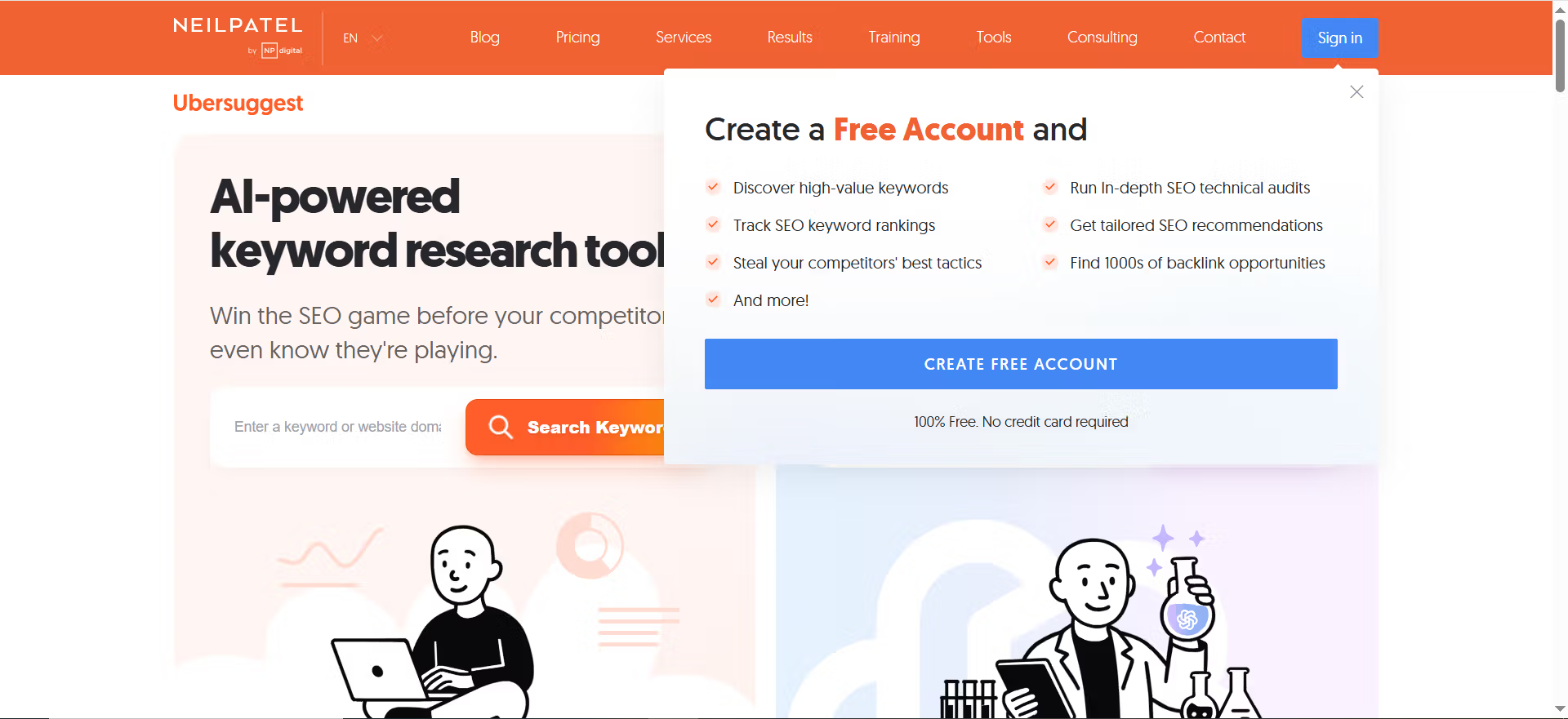
Best for: Early-stage websites, solo founders, and budget-first teams validating whether SEO is worth deeper investment.
Where it shines vs Ahrefs: Ubersuggest wins purely on economics and simplicity. The $290 lifetime license costs about what ten weeks of Ahrefs Lite does, limits are fixed and predictable rather than credit-depleted, and the interface asks nothing of a first-time operator. It is the option that keeps SEO affordable while you prove the channel deserves a bigger tool.
What it is: Ubersuggest, Neil Patel's entry-level SEO platform, bundles keyword research, site audits, rank tracking, basic backlink data, and an AI writer at the lowest paid price point in this comparison, with an unusual lifetime license option.
Key features:
- Entry Economics: Ubersuggest starts at $29 per month, with a one-time lifetime license at $290 that pays for itself in ten months of equivalent monthly billing.
- Site Audit Basics: the auditor flags broken links, thin pages, and speed issues with fix-first prioritization suited to non-technical operators.
- Keyword Ideas: the keyword engine returns suggestions, questions, and comparisons with volume and difficulty, enough to plan a starter content calendar.
- Rank Tracking: project tracking covers daily positions for a modest keyword set per project, matched to small-site needs.
- Chrome Extension: the overlay surfaces volume and CPC data directly inside Google results while you browse.
Pricing (2026): Individual runs $29 per month or $290 lifetime, Business $49 per month or $490 lifetime, and Enterprise $99 per month or $990 lifetime, with a 7-day free trial on paid plans.
| Ubersuggest Plan | Monthly Price | Lifetime Price | Fits |
|---|---|---|---|
| Individual | $29/mo | $290 one-time | One site, starter workflows |
| Business | $49/mo | $490 one-time | Freelancers, a handful of sites |
| Enterprise | $99/mo | $990 one-time | Small agencies at entry scale |
Pros: Lowest paid entry price here, lifetime license removes recurring cost anxiety, genuinely beginner-friendly interface.
Cons: Keyword and backlink databases are notably smaller than Semrush or Ahrefs, data freshness lags, and plan limits have been restructured over time, which makes the lifetime bet a calculated one.
When to choose it: Pick Ubersuggest when the alternative is using no tool at all. It validates topics and fixes basics at a price that never becomes the reason you quit SEO.
5. GSC + GA4 + Keyword Planner: Best Free Ahrefs Alternative Stack
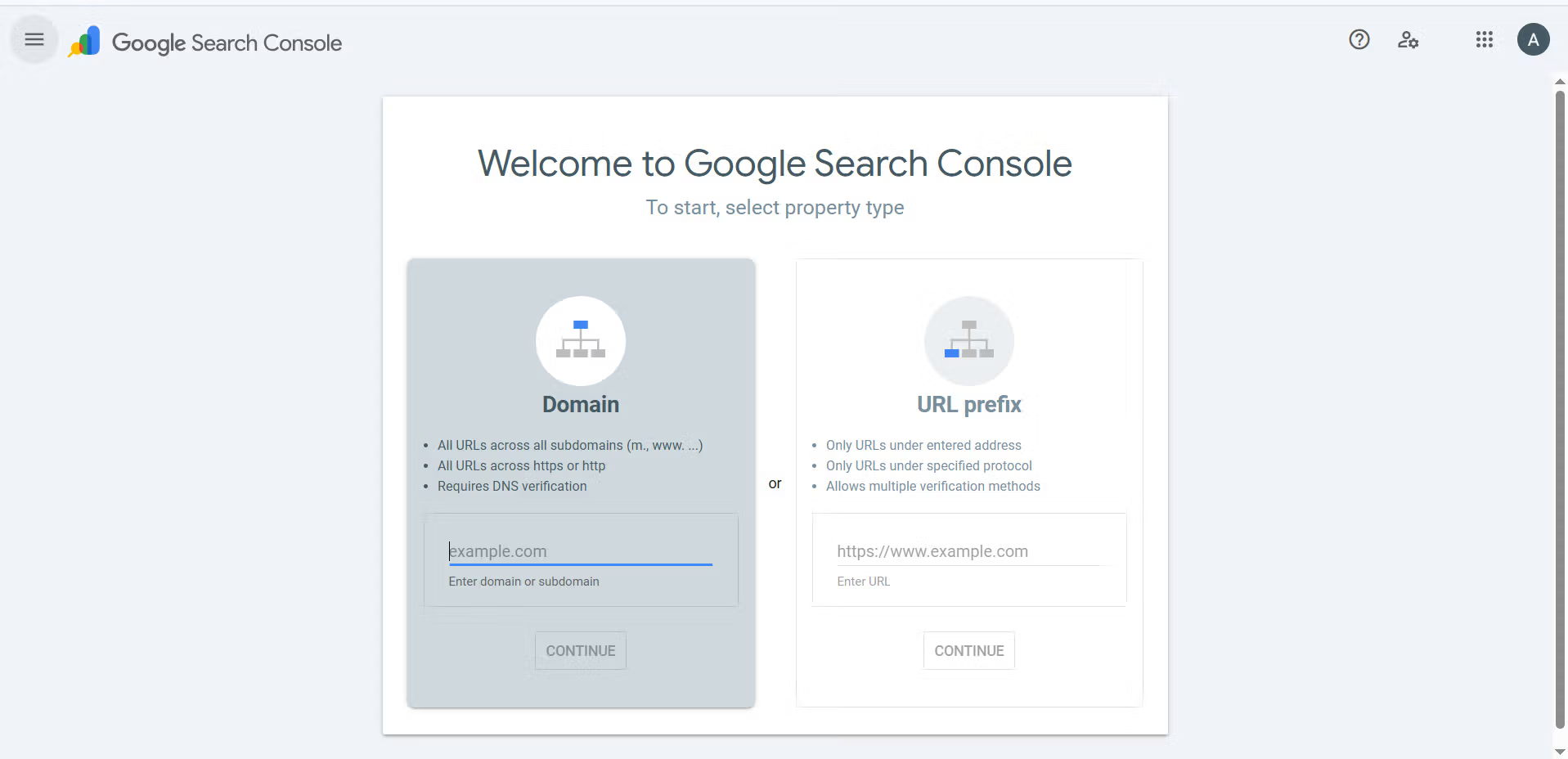
Best for: New sites, zero-budget teams, and anyone who wants ground truth before paying for third-party estimates.
Where it shines vs Ahrefs: The Google stack wins on truth. Every impression, click, and position in Search Console is measured, not modeled, which makes it the dataset Ahrefs itself tries to approximate. It costs nothing, and the quick-win queries it surfaces are drawn from your site's actual performance rather than a third-party index.
What it is: Google Search Console, Google Analytics 4, and Google Keyword Planner form the only stack built entirely on first-party data. GSC reports the real queries and pages earning impressions and clicks, GA4 shows what visitors do after arriving, and Keyword Planner expands topics with demand estimates drawn from the ad auction itself.
Key features:
- Query Truth: Google Search Console reports actual impressions, clicks, and average positions for your pages, data no paid tool can fully replicate because every third-party platform estimates what GSC measures.
- Behavior Layer: GA4 connects search entrances to engagement and conversions, the linkage that turns rankings into pipeline reporting.
- Demand Expansion: Keyword Planner surfaces related keyword ideas with volume ranges and commercial signals from advertiser bidding.
- Quick-Win Mining: the Performance report filtered to positions 8 through 20 is the fastest free prioritization system in SEO, showing exactly which pages need one push to reach page one.
| Stack Component | What It Answers | Hard Limit |
|---|---|---|
| Search Console | Which queries and pages Google already shows you for | No competitor data, limited history window |
| Google Analytics 4 | What search visitors do on your site | No keyword-level acquisition detail |
| Keyword Planner | What adjacent demand exists | Volume ranges, ad-auction framing |
Pros: Free, authoritative, and the baseline every paid tool ultimately gets benchmarked against.
Cons: No competitor visibility, no backlink index, manual stitching between tools, and no view of AI answers, which is why growing teams eventually layer a paid suite or a dedicated AI visibility audit workflow on top.
When to choose it: Always. This stack is not either-or with the four paid tools above. It is the foundation you keep under whichever one you buy.
Why SEO Teams Are Looking for Ahrefs Alternatives in 2026
SEO teams are leaving Ahrefs in 2026 for three reasons, namely two price increases since 2023, a credit-based usage model that makes monthly costs unpredictable, and the shift of buyer discovery into AI answers.
The cost pressure is concrete:
- Entry price: Ahrefs Lite now runs $129 per month, up from $99 before the April 2024 revision, with Standard at $249 per month and a restricted $29 Starter tier capped by report credits.
- Usage metering: Report credits deplete every time you open a report or apply a filter, which means a heavy research week can lock your data tools until the next billing cycle.
- Seat economics: Additional users are a paid add-on on every plan, so a three-person team pays materially more than the sticker price suggests.
The strategic pressure is bigger than the invoice. When roughly one in five Google searches already returns an AI summary, per the same Pew Research Center dataset, rank tracking alone stops describing your real visibility.
Teams now need to know whether they appear inside AI answers, a question we break down in our guide to auditing brand visibility on LLMs. That reframing, not just price, is what makes 2026 the year the alternatives conversation got serious.
How We Selected and Ranked These Ahrefs Alternatives
These five tools were selected against four weighted criteria, namely data reliability, feature coverage relative to price, learning curve, and AI visibility readiness, based on hands-on use across live SaaS campaigns.
The Rank Masters team runs these platforms daily inside client engagements, including the workflows documented in our PSOhub AEO and SEO case study, so the rankings reflect operating experience rather than feature-page skimming.
| Criterion | What We Measured | Why It Matters in 2026 |
|---|---|---|
| Data reliability | Freshness of keyword, ranking, and link data against first-party GSC numbers. | Stale volumes produce content plans that miss real demand. |
| Value per dollar | Verified 2026 pricing against the workflows a B2B team runs weekly. | Ahrefs' price increases made cost-per-workflow the deciding metric. |
| Learning curve | Time for a non-specialist marketer to produce a usable report. | Most SaaS teams have no dedicated SEO analyst. |
| AI visibility readiness | Whether the tool tracks presence in AI Overviews and LLM answers. | AI answers now intercept clicks before the SERP, per Pew's 2025 data. |
The list is ranked by overall fit for B2B SaaS and content-led teams. It is deliberately five tools, not fifteen, because a shortlist you can actually evaluate in a week beats an exhaustive directory you never finish reading.
Which Ahrefs Alternative Tracks AI Visibility (GEO and AEO)?
Semrush offers the deepest AI visibility coverage of the five alternatives through its AI Visibility Toolkit and Semrush One bundle, while Mangools provides lightweight brand checks and the remaining options require pairing with a dedicated tracker.
This question now belongs in every tool evaluation because AI answers intercept the click before your ranking ever gets seen. Pew's browsing data showed users who encounter an AI summary click a cited source inside it in only 1% of visits, which means being the cited source is a distinct, winnable battle from ranking below the box.
| Tool | AI Visibility Capability (2026) | Practical Use |
|---|---|---|
| Semrush | AI Visibility Toolkit; Semrush One bundles it with classic SEO from $199/mo | Monitor brand mentions and share of voice across LLM answers |
| SE Visibly by SE Ranking | AI brand visibility and competitor benchmarking | Benchmark AI share of voice against rivals and pull the cited-source list into PR and content targets |
| Moz Pro | Search visibility scoring only | Pair with a dedicated LLM tracker |
| Ubersuggest | No dedicated LLM tracking | Pair with a dedicated LLM tracker |
| Google stack | AI Overview clicks blend into GSC data without labels | Baseline only; no answer-level view |
Two workflows matter regardless of which tool you buy. First, baseline where your brand currently appears across ChatGPT, Perplexity, Gemini, and AI Overviews, using the process in our AI visibility audit playbook.
Second, restructure priority pages so AI engines can extract and cite them, using answer-first formatting of the kind covered in our guide to writing AEO-optimized content, and fold both into a documented AEO strategy for B2B SaaS.
If Google's answer box is your priority surface, our playbook on increasing visibility in Google AI Overviews covers citation gaps and extraction formatting, and our roundup of the best AI visibility tools for GEO compares the dedicated trackers you can pair with any suite on this list. Tool dashboards report the scoreboard.
The content system moves it, which is the discipline behind our 8,337% ChatGPT referral growth case study.
Executing this well is exactly the gap The Rank Masters closes for B2B SaaS teams, building an ICP-led content system that maps each topic cluster to a money page and to pipeline, rather than publishing posts that never convert.
If AI answers are the channel you are behind on, our Answer Engine Optimization service is the implementation layer these tools report on.
Semrush Vs Ahrefs: Which Should B2B SaaS Teams Pick in 2026?
Semrush wins for B2B SaaS teams that need marketing breadth, PPC intelligence, and AI visibility tracking, while Ahrefs wins for teams whose work is dominated by backlink research and who accept credit-metered usage. These two are the closest direct rivals in the market, and the honest split runs along workflow lines rather than quality lines.
| Decision Factor | Semrush | Ahrefs |
|---|---|---|
| Starting price (2026) | $139.95/mo (Pro) | $129/mo (Lite) |
| Usage model | Plan limits by tier | Report credits that deplete per action |
| Backlink research | Strong | Category leader |
| PPC and ads intelligence | Deep, native | Minimal |
| AI visibility tracking | Native toolkit, bundled in Semrush One | Add-on product at extra cost |
| Ownership context | Acquired by Adobe in a $1.9B deal | Independent |
Three practical notes for SaaS buyers.
First, the sticker prices are near-identical, so the decision is really about which capabilities you use weekly.
Second, the Adobe acquisition, covered by Search Engine Journal, points toward deeper enterprise integration over time, which is a plus for Adobe-stack companies and a watch-item for everyone else.
Third, if backlinks genuinely dominate your program, no alternative on this list fully replaces Ahrefs' link index, and the right move may be pairing a cheaper daily driver with periodic link exports rather than a hard switch.
What Is the Cheapest Ahrefs Alternative in 2026?
The cheapest Ahrefs alternative is the free Google stack, followed by Ubersuggest at $29 per month or $290 lifetime, then Mangools at $29.90 per month on annual billing. The table below puts every option, including Ahrefs itself, on one axis so budget conversations take thirty seconds instead of a meeting.
| Option | Lowest 2026 Entry Cost | 12-Month Cost at Entry Tier | Cost Caveat |
|---|---|---|---|
| GSC + GA4 + Keyword Planner | Free | $0 | Your time stitching tools together |
| Ubersuggest | $29/mo or $290 lifetime | $290 to $348 | Smaller databases, restructured limits history |
| SE Ranking | $129/mo ($103.20 annual) | ~$1,238 | AI-answer depth and agency tooling sold separately |
| Moz Pro | $49/mo ($39 annual) | ~$468 | 50 tracked keywords on Starter |
| Semrush | $139.95/mo ($117.33 annual) | ~$1,408 | Add-ons for some competitive datasets |
| Ahrefs (reference) | $129/mo (Lite) | ~$1,548 | Credit-metered usage, paid extra seats |
Read the caveat column before the price column. A $29 tool you outgrow in eight weeks costs more than a $49 tool that carries you for a year, and the honest budgeting question is which limits you will hit first, not which number is smallest.
How to Choose the Right Ahrefs Alternative in 5 Steps
Choose an Ahrefs alternative by defining your primary 90-day goal, matching features to that single goal, sizing the budget honestly, weighting ease of use, and verifying data freshness, in that order. Teams that skip step one buy the most impressive tool instead of the most used one.
Step 1: Name Your One Primary Goal
Write a single sentence, namely "over the next 90 days I need a tool that helps me [goal] so I can [business outcome]." Keyword research, backlinks, audits, rank tracking, and AI visibility are five different purchases. The tool that is best at all five does not exist at any price on this list.
Step 2: Match Features to That Goal Only
Keyword-led teams should shortlist Mangools and Semrush. Beginner teams fixing on-page basics should shortlist Moz Pro. AI visibility programs need Semrush or a dedicated tracker of the kind we compare in our AI visibility platform showdown. Zero-budget validation starts with the Google stack, full stop.
Step 3: Budget for the Team You Have
Count real seats and real weekly workflows. A rule that has never failed us with clients, if you will not use a feature weekly, do not pay for it yet. Upgrade when your workflow demands it, not when a pricing page impresses you.
Step 4: Weight Ease of Use Higher Than You Think
A clean interface your team opens daily beats a deep toolset nobody touches. Saved views, one-click exports, and report templates stakeholders understand without a walkthrough are worth more than a bigger database in month one.
Step 5: Verify Data Freshness and Support
Check when each database was last updated, whether methodology docs exist, and how fast support responds. First-party GSC data is your reference. Any tool that consistently disagrees with it on your own site earns skepticism about its competitor estimates too.
How to Migrate Off Ahrefs Without Losing Data
A safe Ahrefs migration takes five moves, namely exporting essentials, mapping your weekly reports to equivalents, rebuilding tracking and alerts, re-baselining inside the new tool, and running one overlap billing cycle before cancelling.
Hard cutovers are where migrations go wrong, so phase it.
- Export essentials. Pull keywords, top pages, backlinks, and rank history to CSV, keep your disavow file and link notes, and store everything in one clearly named folder for imports.
- Map your reports. List the three or four Ahrefs reports you open weekly and find the equivalent in your new tool, for example Content Gap maps to Semrush Keyword Gap, and Best by Links maps to Semrush Pages or Moz link reports. Note workarounds where no equivalent exists.
- Rebuild dashboards and alerts. Add brand plus 10 to 20 money keywords to rank tracking on desktop and mobile, schedule audits, and enable alerts for position drops and lost links.
- Re-baseline. Run a full Day 1 audit and rank snapshot inside the new tool so every future movement reflects your new tracking, then compare Day 1 against Day 30. If you want momentum in that window, structure the sprint around a content audit and refresh system rather than tool exploration.
- Phase the transition. Keep Ahrefs for one final billing cycle in parallel, spot-check one audit, one link comparison, and one keyword set, then deprecate it once the new dashboards cover everything you rely on.
| Ahrefs Report You Use | Closest Equivalent | Where It Lives |
|---|---|---|
| Site Audit | Site Audit / Site Crawl | Semrush, Moz Pro, SE Ranking |
| Content Gap | Keyword Gap | Semrush, SE Ranking |
| Keywords Explorer | Keyword Magic Tool / KWFinder | Semrush, SE Ranking |
| Rank Tracker | Position Tracking / SERPWatcher | Semrush, Moz Pro, SE Ranking |
| Best by Links | Pages / Top Pages reports | Semrush, Moz Pro, SE Ranking |
One caution from client migrations, do not import old third-party difficulty scores into the new tool's mental model.
Each platform calculates difficulty differently, so re-score your target list natively and re-prioritize against fresh numbers.
Frequently Asked Questions
Is There a 100% Free Ahrefs Alternative?
Which Ahrefs Alternative Is Best for Agencies?
Is Semrush Still Worth It After the Adobe Acquisition?
Can Ubersuggest Really Replace Ahrefs?
Which Ahrefs Alternative Has the Best Backlink Data?
Do I Need an SEO Tool and an AI Visibility Tool?
How Many Keywords Should I Track After Switching?
Final Thoughts: Match the Tool to Your Next 90 Days
You do not need a perfect Ahrefs clone. You need the right tool for the next 90 days of work. If one platform should cover SEO, competitors, PPC, and AI visibility, Semrush is the safest all-around pick. If your bottleneck is knowing what to fix, Moz Pro gets a small team moving fastest. If keywords are the whole job, Mangools does that job better per dollar than anything here. If budget is the constraint, Ubersuggest keeps you in the game, and the free Google stack should sit underneath whichever tool you choose, because it is the only source that reports what Google actually shows for your site.
Then run the play, track 10 to 20 money keywords, fix the highest-impact technical issues, publish three or four pieces against low-difficulty high-intent topics, and baseline your presence in AI answers so the next quarter's plan covers both scoreboards.
Teams that want the selection framework formalized can use our B2B SaaS SEO agency scorecard and RFP template to pressure-test any stack or partner, and our case studies show what the execution side looks like when it works.
If thin BOFU coverage is costing you pipeline, book a SaaS content strategy call and we will map your highest-intent topics to revenue.
📑 Disclosure!
Some links in this article are affiliate links. If you sign up through them, The Rank Masters may earn a commission at no additional cost to you. This does not influence which tools we recommend or what we say about them.