
If your PR team is still measuring success only in impressions and share of voice, you’re missing a new outcome: whether AI systems mention and cite your brand when buyers ask for recommendations. The best AI visibility tools help you monitor prompts across ChatGPT, Perplexity, Google AI Overviews/Mode, Gemini, Copilot, etc., then show (1) whether you’re mentioned, (2) where you appear, (3) which sources AI is using, and (4) what to do next. Tools like PromptMonitor, Profound, OtterlyAI, Akii, and Conductor all attack this problem from different angles, so the “best” one depends on whether you’re optimizing PR placements, content authority, or enterprise reporting.
Table of Contents
📋 Get Listed / Advertisement
We update this guide monthly. Want your tool featured? Contact: [email protected].
Best AI Visibility Tools for PR + Mention Strategy (Quick Comparison)
| Tool | Best for PR teams who need… | What it’s strongest at | Typical org fit |
|---|---|---|---|
| Promptmonitor | A practical “monitor + source + outreach” loop | Shows mentions/citations and helps you act on sources/outreach | SMB → mid-market, agencies |
| Profound | Executive-level AI visibility + insight into “how AI talks” | Brand presence in AI answers + citations discovery | Mid-market → enterprise |
| OtterlyAI | Prompt-level monitoring across major AI search experiences | Repeated prompt runs + tracking mentions/citations over time | SMB → enterprise, agencies |
| Akii | Visibility/trust gaps and optimization guidance | Identifying why you’re excluded + what to fix | Mid-market, performance teams |
| Conductor | Enterprise AEO + integration into broader organic stack | “Get found in AI search” focus + enterprise workflows | Enterprise SEO/PR alignment |
1. Promptmonitor
What it does
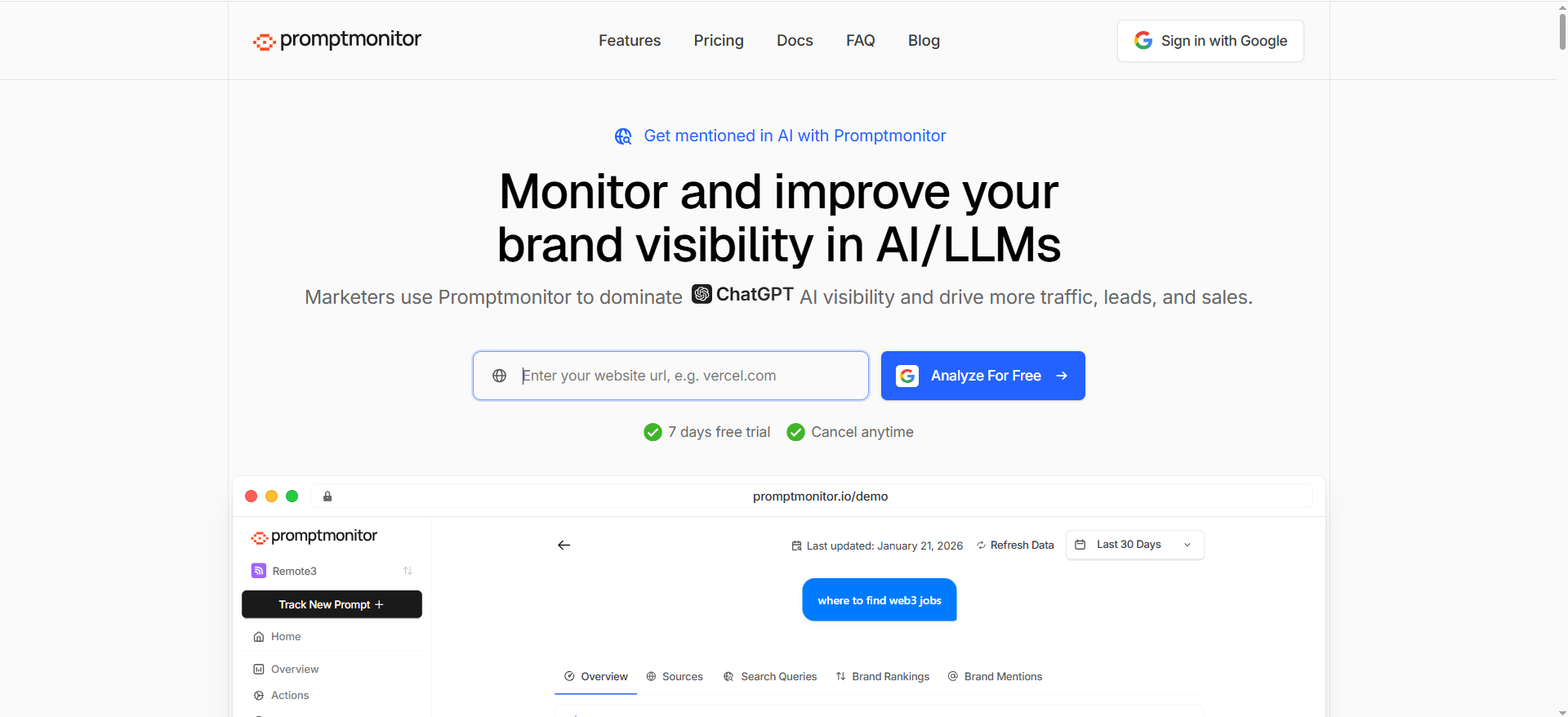
PromptMonitor positions itself as a tool to track and optimize visibility across AI platforms (e.g., ChatGPT, Perplexity, and others), focusing on whether you get mentioned and what sources AI relies on.
Why PR teams use it
PR teams care about influence. PromptMonitor is especially relevant because it emphasizes a loop PR understands: find the sources AI trusts → earn mentions on those sources → watch AI mentions increase. Its site highlights that it can show which sources AI is using and then support outreach by extracting contact information for those publishers.
What it’s good for
- Building a repeatable earned-media → AI mention workflow (source discovery → outreach targets → tracking)
- Identifying which domains appear as citations in AI responses (a proxy for “AI-trusted outlets”)
- Teams that want an actionable tool, not just dashboards
When it’s a good fit
- You’re a PR lead at a growth-stage company and need a system to prove “PR is influencing AI discovery.”
- You’re an agency running AI visibility reporting across multiple clients and need something lightweight and operational.
- You want daily freshness (the pricing FAQ indicates daily refresh across plans).
When it’s not a good fit
- You need deep enterprise governance, complex role permissions, or tight integration into a large SEO platform (you may prefer Conductor).
How to use it
- Start with 10–30 prompts that mirror buyer and journalist queries (category comparisons, “best tools,” “top agencies,” “X vs Y”).
- Track for your brand + 2–3 competitors.
- Export the list of recurring cited domains.
- Prioritize outreach where the outlet is both (a) relevant to your category and (b) repeatedly cited.
- Run a monthly “before vs after” report showing prompt coverage and citation sources shifting over time.
Key capabilities
- Prompt monitoring across multiple AI systems
- Mention detection + citation/source extraction
- Reporting cadence (daily refresh is highlighted)
Pricing
Promptmonitor’s Starter plan is $49/month (or $29/month billed annually).
Free tier?
Promptmonitor doesn’t offer a free tier, but it does offer a 7-day free trial.
Downsides / limitations
- Like all prompt trackers, outputs can vary because AI answers are stochastic; you’ll want repeated runs, consistent prompt phrasing, and a baseline period.
- If your org requires a single unified “organic + AI visibility” platform, you may find it’s one part of the stack rather than the whole thing.
2. Profound
What it does
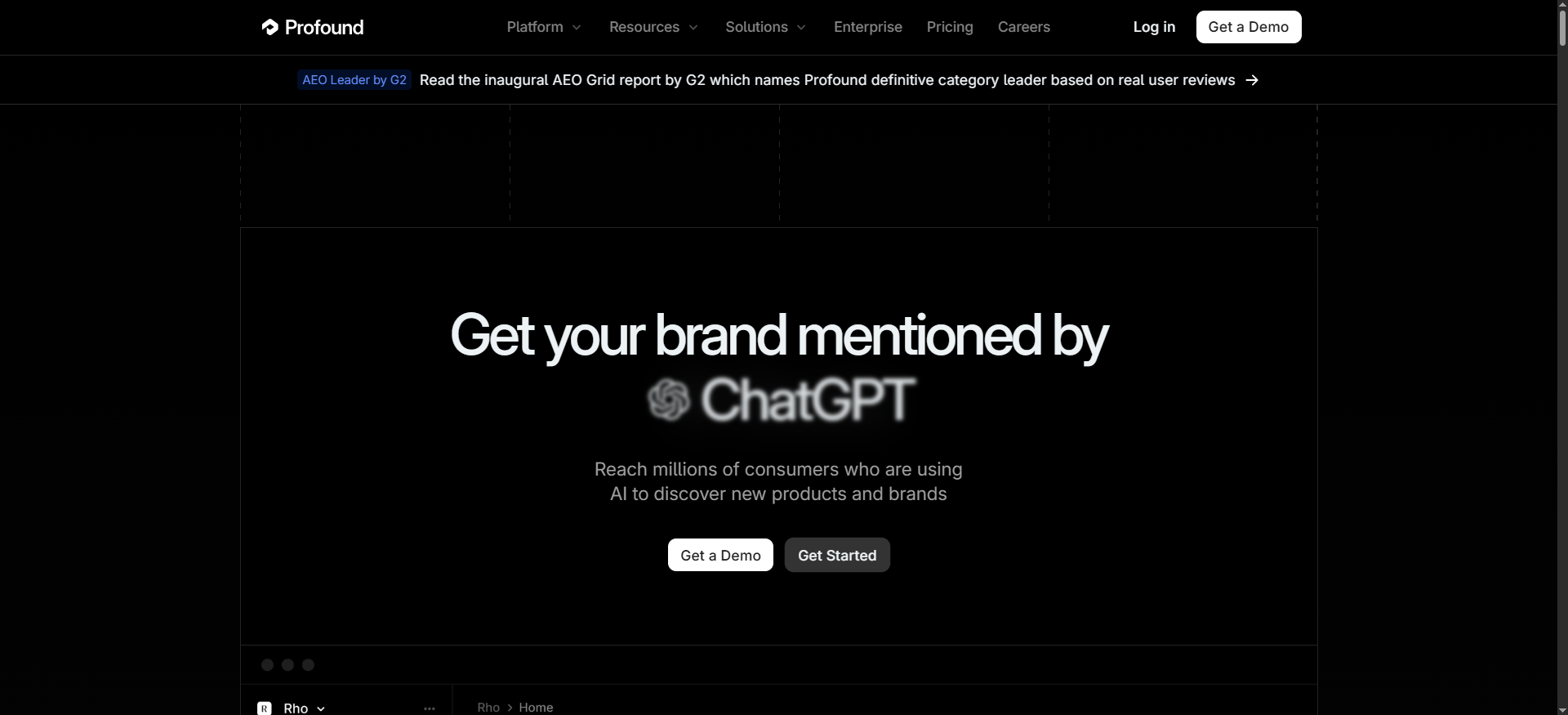
Profound markets itself as a platform to track AI visibility, see where and how AI mentions your brand, and uncover citations that drive AI answers.
Why PR teams use it
If you’re running PR in 2026, you’re not just managing coverage, you’re managing how the market narrates your category, and AI systems are now a major narrator. Profound is built around that: understanding how AI is talking about your brand and what to change.
What it’s good for
- Leadership-friendly dashboards around “AI visibility” (great for comms reporting to executives)
- Connecting visibility to citations (what sources are influencing AI answers)
When it’s a good fit
- You need a premium tool for brand-level monitoring across AI answer engines
- You want a platform that treats AI visibility like a core channel, not an SEO add-on
When it’s not a good fit
- If you primarily need media monitoring across news/social/broadcast (classic PR listening), you’ll still want Meltwater/Cision/Muck Rack for that layer. Profound is not a replacement for broad media monitoring.
How to use it
- Track your brand + category prompts.
- Pull the “AI citation sources” list.
- Align PR pitching targets with the same domains AI repeats.
- After coverage lands, monitor whether those domains begin appearing as citations for your core prompts more frequently.
Key capabilities
- Brand presence tracking in AI answers
- Citation/source visibility
- Insights to take action
Pricing
Profound pricing starts at $99 per month.
Free tier?
Profound doesn’t offer a public free tier, but it does offer a demo and a free AEO Report.
Downsides / limitations
- Premium tools often require process maturity: prompt libraries, reporting cadence, and cross-functional buy-in to convert insights into placements and content changes.
3. OtterlyAI
What it does
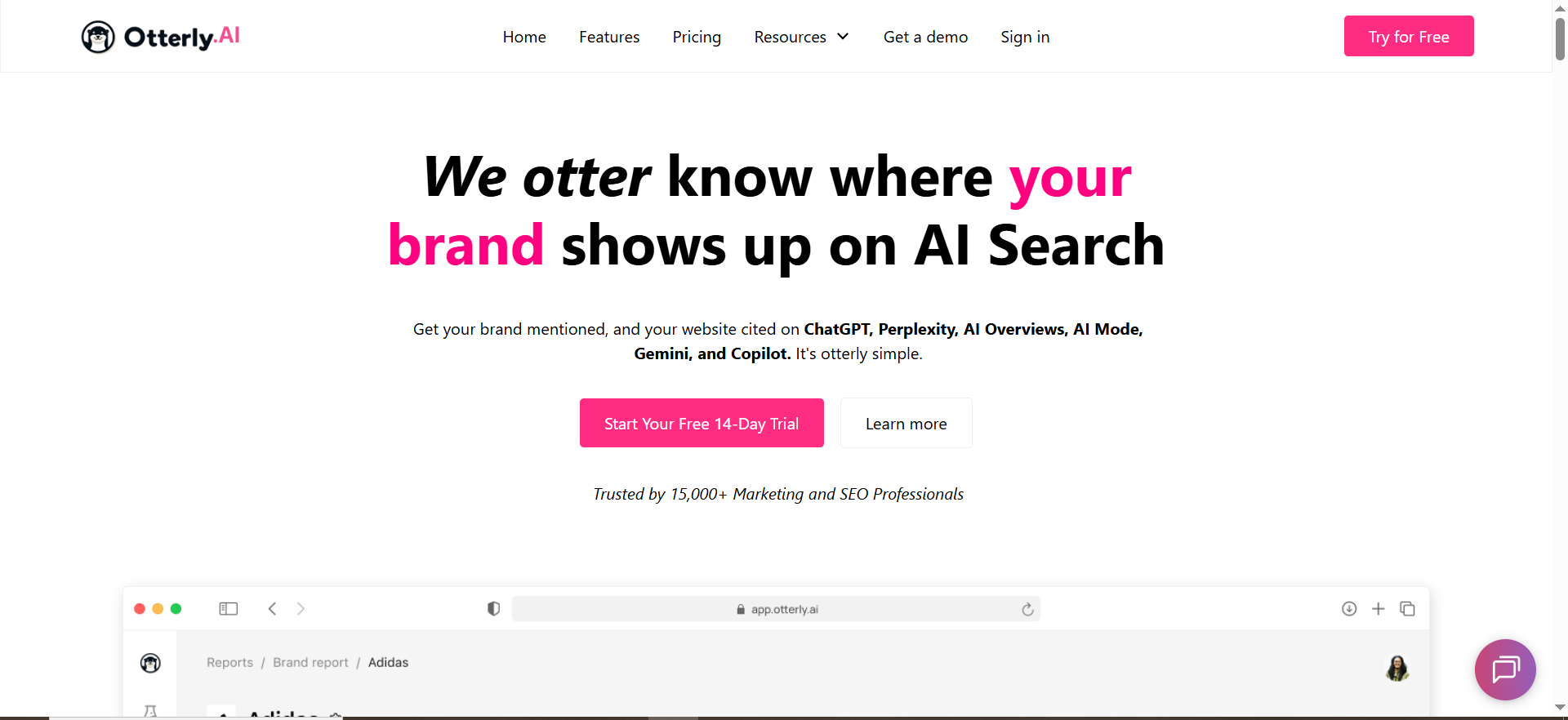
OtterlyAI describes AI visibility tracking as automatically sending prompts to AI search engines (ChatGPT, Perplexity, Google AI Overviews/Mode, etc.) and analyzing responses for mentions, citations, and source links.
Why PR teams use it
OtterlyAI makes PR outcomes measurable in AI spaces: “Are we cited when people ask for the ‘best X’?” and “What pages does AI reference when it explains our category?” That’s the connective tissue between earned media and AI discovery.
What it’s good for
- Prompt monitoring and reporting (including feature pages describing prompt monitoring and reporting)
- Agencies managing multiple clients (OtterlyAI has agency-focused pages describing multi-platform coverage and monitoring)
When it’s a good fit
- You want multi-engine coverage and repeatable reporting
- You want a clear “prompt set → tracking → change log” workflow
When it’s not a good fit
- If your biggest need is outreach workflow (journalist databases, pitching, press room management), you’ll still need PR systems like Muck Rack.
How to use it
- Build a prompt library that reflects PR narratives: category definitions, comparisons, “alternatives,” “best agencies,” “best tools.”
- Track baseline visibility for 2–4 weeks.
- Launch a PR sprint focused on landing mentions in the domains that appear as AI citations.
- Track lift in mentions/citations and archive “winning sources” as your PR target list.
Key capabilities
- AI prompt tracking + mention/citation analysis
Pricing
OtterlyAI’s Lite plan is $29/month (or $25/month billed annually).
Free tier?
OtterlyAI doesn’t offer a free tier, but it does offer a free trial for new users.
Downsides / limitations
- Like all AI monitoring, you’ll need a “prompt governance” practice (standardized prompts, cadence, and documentation) to avoid noisy trendlines.
4. Akii
What it does
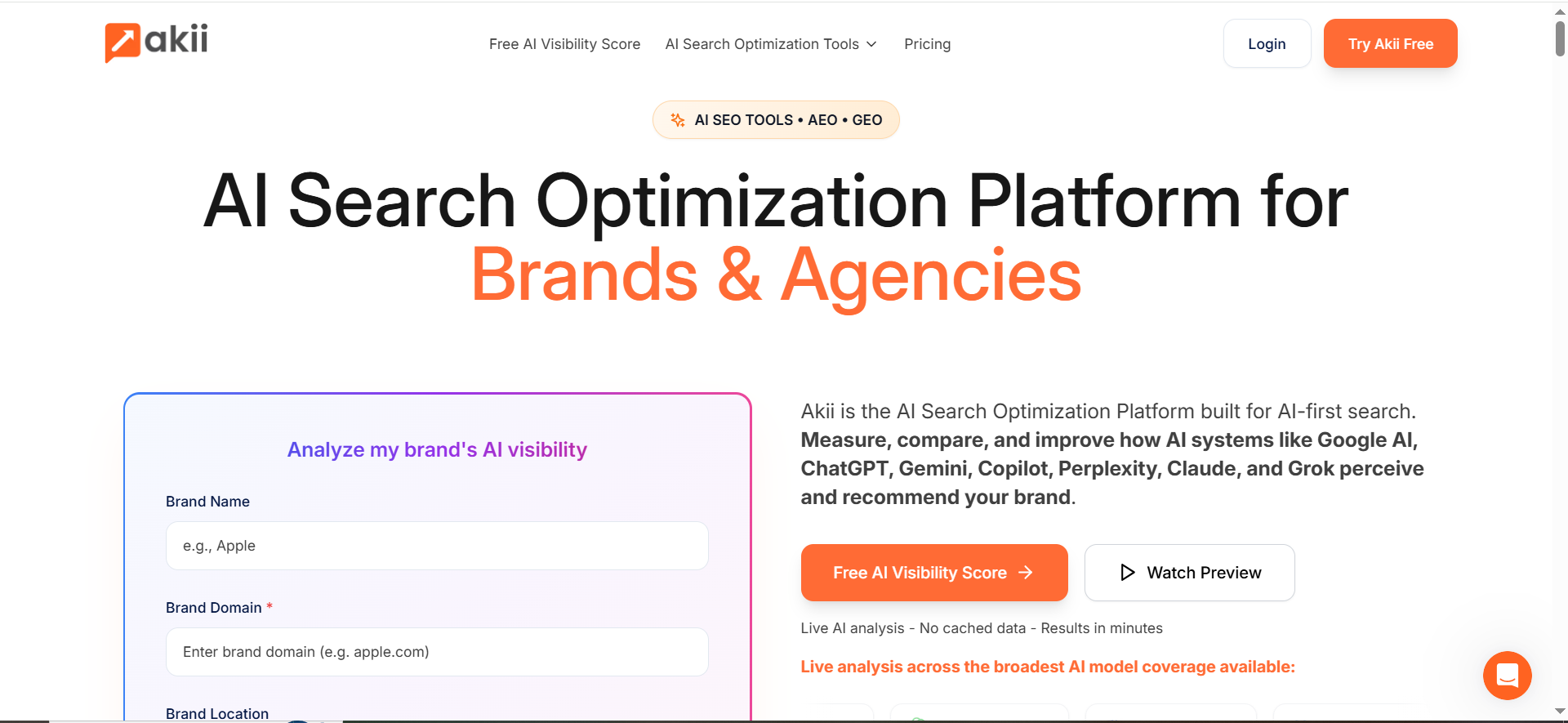
Akii positions itself as an AI Search Optimization Platform that scans major AI models, identifies visibility and trust gaps, and provides actions to improve how AI systems recommend your brand.
Why PR teams use it
PR is fundamentally about trust signals, third-party validation, credible sources, and narrative consistency. Akii’s framing (“AI engines only recommend brands they understand, trust, and can confidently cite”) maps directly to modern comms strategy.
What it’s good for
- Diagnosing “why we’re missing” in AI answers
- Building a prioritized list of trust-building fixes (source gaps, entity confusion, inconsistent positioning)
When it’s a good fit
- You have a strong PR/content engine and want to make it “AI-visible” with clearer actions
- You want a tool that treats AI visibility as a trust + recommendation problem, not just a rank-tracking problem
When it’s not a good fit
- If you only need “simple monitoring,” you might start with a lighter prompt tracker and add Akii when you’re ready to optimize systematically.
How to use it
- Run a scan for your category prompts.
- Identify recurring “trust gaps” (missing entity signals, weak third-party references, conflicting descriptions).
- Align PR placements to fill those gaps: authoritative explainers, neutral third-party lists, and references that stabilize your narrative.
Key capabilities
- Model scanning + visibility/trust gap analysis + actions
Pricing
Akii’s Starter plan is $49/month.
Free tier?
Akii offers a free AI Visibility Score with 100 free AI credits (no credit card required), and it also offers a 14-day free trial on paid plans.
Downsides / limitations
- Optimization guidance is only as good as execution: you’ll still need PR placements, content updates, and technical clarity to move outcomes.
5. Conductor
What it does
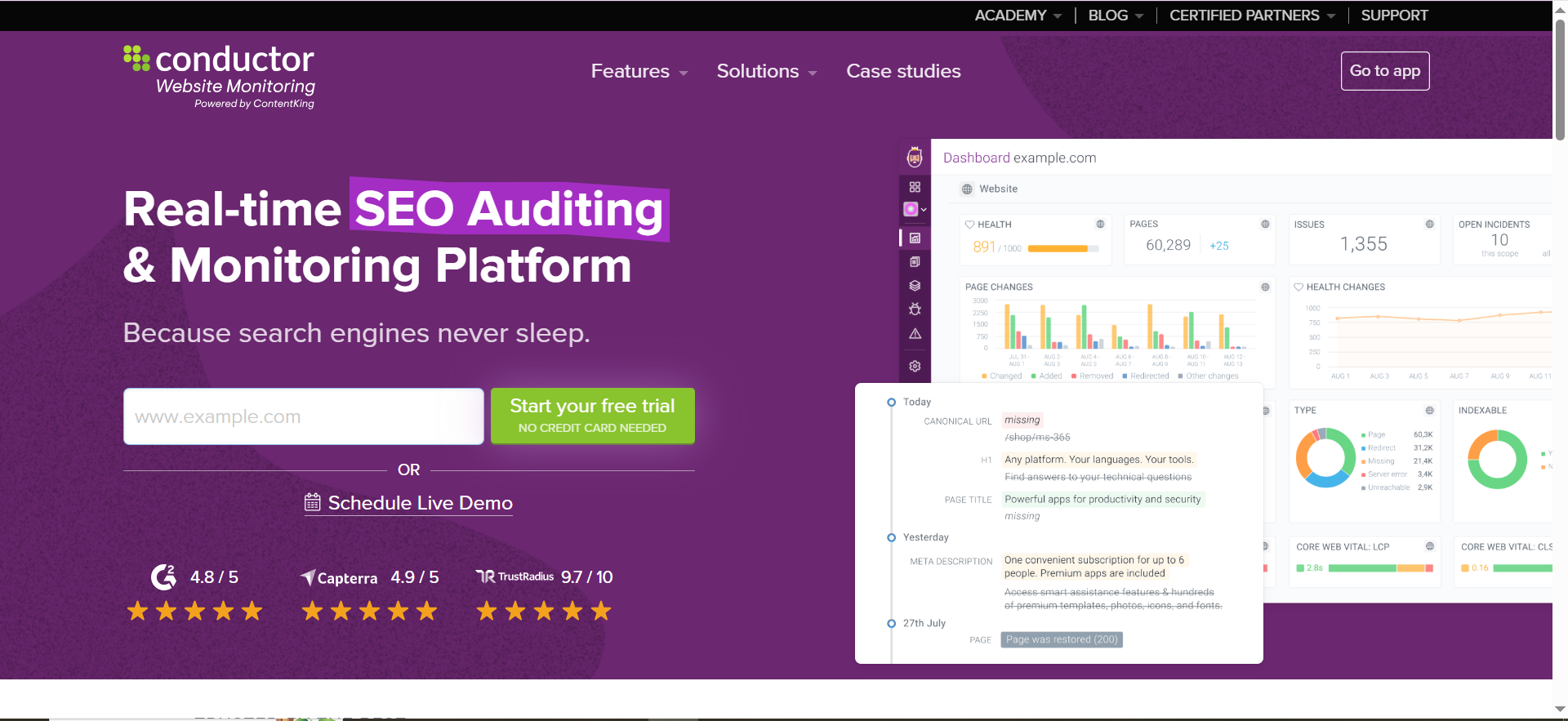
Conductor positions itself as an enterprise platform to increase brand visibility across AI search/answer engines (ChatGPT, Perplexity, Google, and more).
Why PR teams use it
Conductor is often used where SEO and PR must share a single reporting layer. If your PR team needs to show “earned media changed AI visibility” and your SEO team needs to connect it to organic outcomes, Conductor’s “AEO platform” posture can help align stakeholders.
What it’s good for
- Enterprise workflows, stakeholder reporting, and integration into broader organic strategy
When it’s a good fit
- You’re enterprise, with a dedicated SEO function, and PR needs to plug into the same measurement ecosystem
- You need governance (teams, roles, repeatable reporting)
When it’s not a good fit
- If you’re a lean PR team seeking a simple “prompt monitoring + outreach targets” loop, you may not need an enterprise platform yet.
How to use it
- Build a joint SEO+PR prompt set (category prompts + brand prompts).
- Establish a baseline.
- Run a PR campaign focused on landing in the domains and narratives that AI repeats.
- Report quarterly: share of AI mentions, share of citations, and the “top sources AI uses about us.”
Key capabilities
- “Get found in AI search” positioning, enterprise AEO framing
Pricing
Conductor’s pricing is not publicly listed; it’s available.
Free tier?
Conductor doesn’t offer a free tier, but it does offer a free AI Visibility Snapshot Report and a 3-week free trial.
Downsides / limitations
- Enterprise platforms can take time to implement well; you’ll want clear ownership across PR, SEO, and analytics.
What “earned media → AI visibility” actually means in 2026
Classic PR logic: coverage influences humans.
Modern PR logic: coverage influences humans and the systems humans consult first, LLMs and AI search experiences that summarize, recommend, and cite. Tools like OtterlyAI describe AI visibility tracking as running prompts across AI engines and analyzing responses for brand mentions and citations.
Here’s the mental model:
- Earned media is a distribution channel (people read it, share it, link to it).
- But it’s also a knowledge substrate (it becomes part of the public web AI systems draw from).
- AI visibility is the measurable outcome: do those systems mention you when users ask relevant questions?
So the new PR KPI isn’t just “we got coverage.” It’s:
We got coverage in the places AI repeatedly cites for our category, and our AI mention rate increased for prompts buyers actually use.
The PR mention strategy that AI models trust
Your brief’s core angle is perfect: “Mentions that AI models trust.” The difference between a mention that “feels good” and a mention that “moves AI visibility” usually comes down to where it lives and how it’s written.
The “Trust Surfaces” map
When AI systems answer questions, they tend to pull from a blend of:
- Authoritative explainers (industry publications, well-maintained blogs, academic/government sources where relevant)
- List posts and comparisons (“best X tools,” “X vs Y,” “alternatives”), especially when they include structured info
- Reference hubs (Wikipedia-like entities, knowledge bases, company profile databases)
- Consensus forums (where expert discussion is stable and specific)
- Primary sources (official docs, product pages, pricing pages, especially if frequently referenced)
Many AI visibility platforms explicitly focus on uncovering which sites drive AI answers via citations, because those sites are your “trust surfaces”.
PR takeaway: your media list should expand beyond “journalists who might cover us” into “domains AI repeatedly cites when defining and recommending our category,” which is exactly what the AI citations playbook helps you operationalize.
The “Mention Quality” checklist (what makes a mention reusable)
A “trusted AI mention” usually has these traits:
- Clear entity anchoring: brand name + what it is + category context in the same paragraph
- Factual specificity: what you do, who you’re for, and what differentiates you
- Comparable framing: included among peers (“top tools,” “alternatives,” “vendors”)
- Stable URL target: the mention links to a canonical page that won’t change or break
- Neutral tone: ironically, the most reusable mentions are often the least promotional (AI systems like “explainers,” not hype)
This is why PR surfaces like “best tools” articles, reviews, and category explainers can outperform generic announcements for AI visibility, even if the announcement got more impressions, especially when you invest in evergreen content that keeps earning citations.
The “Source Ladder” (how to move from weak mentions to strong citations)
Use this ladder to prioritize outreach:
Level 1 — Weak mentionA one-line name drop without context, no link, or a low-quality directory listing.
Level 2 — Contextual mentionBrand is described clearly in a relevant article, with a link to a stable page.
Level 3 — Comparative inclusionYou’re included in a structured “best tools” list or an alternatives comparison (often high reuse in AI answers).
Level 4 — Citation magnetYour brand appears in sources that AI systems repeatedly cite for your category prompts (this is the gold standard, and why tool.s emphasize “citation discovery”).
How to set up tracking (prompts, personas, and baselines)
Most AI visibility tools converge on the same core mechanic: run prompts → measure mentions/citations → compare over time.
Step 1: Build a PR-first prompt library (not an SEO keyword list)
Start with 30–60 prompts split across:
- Category definition prompts: “What is [category]?” “How does [category] work?”
- Recommendation prompts: “Best [category] tools for [use case]”
- Comparison prompts: “[Brand] vs [Competitor]”
- Shortlist prompts: “Top [category] vendors for enterprise”
- Narrative prompts: “How do I measure [outcome]?” “How do I pick a [vendor]?”
You’re essentially modeling the queries that decide whether you’re in the consideration set.
Step 2: Track mentions AND citations separately
Mentions answer: Are we present?Citations answer: Which sources are shaping the answer?
OtterlyAI’s explanation explicitly frames tracking around brand mentions, citations, and source links.
Step 3: Use a baseline period
Because results can fluctuate, you want a stable baseline (2–4 weeks) before claiming improvement, especially if you’ll use this in stakeholder reporting.
Step 4: Add “PR surfaces” as a segment
Your brief calls out PR surfaces. In practice, tag the cited domains into buckets like:
- Tier-1 industry pubs
- Review/list sites
- Analyst-style sources
- Community/forums
- Your owned assets (docs, blog, landing pages)
This turns “AI citations” into a PR media list you can actively manage, especially when you run a structured AI search visibility audit.
How to operationalize outreach (monthly cadence + reporting)
A simple monthly cycle that works:
Week 1 — Source discovery sprint
- Export the top recurring citation domains for your priority prompts.
- Identify which ones mention competitors but not you
- Build a pitch angle that fits their format (best list inclusion, data-driven quote, expert POV, case study)
Week 2 — Placement sprint
- Pitch 15–30 targets (prioritize “comparative inclusion” and “category definition” pages)
- Aim for contextual mentions with stable links, not pure announcements
Week 3 — Content alignment sprint
- Update your canonical pages so they’re easy to cite: clean definitions, comparison tables, FAQs, and stable positioning (this is easier when you follow a clear AEO content structure).
Week 4 — Reporting sprint
Report three numbers:
- Mention rate (share of prompts where you appear)
- Citation share (how often your target domains show up as sources)
- Prominence (are you first, middle, or buried?)
Then add 5 screenshots of “winning answers” for qualitative proof.
Common pitfalls (and how to avoid false wins)
- Chasing “mentions” on low-trust sites: You might spike mention count without improving “trusted citations,” which is why teams should track share of voice in AI answers instead of raw mentions alone.
- Not separating PR monitoring from AI monitoring: Media monitoring tools (Meltwater, CisionOne, Muck Rack) are still essential for broad coverage, but they’re not the same as “AI answer monitoring,” which is what an AI visibility platform is designed to do.
- Using only branded prompts: Buyers ask unbranded questions, so your prompt set should reflect real demand using a solid keyword research foundation.
- Changing prompts every week: You’ll destroy comparability. Governance matters: freeze a core set, and add new prompts as a separate cohort; this is part of building AI strategic visibility instead of chasing noise.
- Claiming ROI without attribution thinking: AI visibility is an upstream metric. Pair it with downstream indicators (demo assists, branded search lift, referral patterns) and keep your narrative honest.
How do I know if my PR campaign improved AI visibility?
You’ll know your PR campaign improved AI visibility when AI answers change in a consistent, measurable way across a stable set of prompts, and those changes align with the sources you influenced through earned media.
Here’s the clean way to prove it without “vibes-based” reporting:
1) Establish a baseline
Before the campaign starts, track your core prompts for 2–4 weeks. Your baseline should capture:
- Mention rate: % of tracked prompts where your brand appears
- Citation rate: % of prompts where your campaign target outlets (or your owned assets) appear as citations/sources
- Prominence: whether you appear in the top 1–3 recommendations vs buried
- Narrative accuracy: how often the AI description matches your positioning (and avoids competitor misattribution)
If you don’t baseline, you can’t tell “real lift” from normal AI variability, which is why teams should start with a consistent LLM visibility audit.
2) Use “before vs after” cohorts
Split your prompts into cohorts so you can isolate impact:
- Core buyer prompts (“best X tool for Y”, “X alternatives”, “X vs Y”)
- Category explainer prompts (“what is X”, “how does X work”)
- Brand prompts (“is [brand] good for enterprise?”)
Then run:
- Pre-campaign average
- Campaign midpoint
- Post-campaign (2–4 weeks after placements land)
Why the delay? AI systems don’t always reflect new sources instantly.
3) Tie lift to specific earned placements
This is the part execs care about: What did PR do that changed AI output?
Do it with a simple evidence chain:
A) We landed coverage on domains AI cites
→ B) Those domains began appearing more often in citations→ C) Our mention rate / prominence improved→ D) The AI explanation of our brand became more accurate, especially when you align earned placements to PR brand messaging for AI visibility
4) Track deltas, not one-off screenshots
One screenshot isn’t proof, so you need repeatable AI visibility reporting over time.
- Net new prompts with mentions (e.g., 18 → 29 out of 50)
- Average position change (e.g., from #6 to #3 in recommendations)
- Share-of-voice in AI answers (your brand mentions vs competitors)
- Citation overlap (how many answers cite the same 10–20 “trusted” domains)
5) Add a “quality” layer so you don’t chase empty wins
Improvement isn’t just “mentioned more.”A real win is:
- Mention + correct category placement
- Mention + stable link/citation
- Mention + comparison inclusion
- Mention + consistent positioning across models
6) Practical KPI set PR can own
If you want a lightweight dashboard:
- AI Mention Coverage (core prompt set)
- AI Citation Share (campaign target outlets)
- AI Top-3 Presence (how often you’re in top recommendations)
- Narrative Consistency Score (manual rubric monthly)
How many prompts should we track for a brand?
Most brands should track 30–60 prompts to start. Agencies and enterprise teams often go 100–300+ once the process is mature.
The right number depends on your goals
If you’re PR-led and want clarity fast:
- 30–60 prompts is plenty to prove movement and focus outreach.
If you’re multi-product / multi-market:
- 60–150 prompts (segment by product line and region).
If you’re an agency managing multiple clients:
- Start clients at 25–40 each, then expand once the reporting rhythm is stable.
Use this simple prompt allocation
For a single product/category:
- 10–15 Category prompts
- “What is X?” “How does X work?” “Use cases of X”
- 10–20 Recommendation prompts
- “Best X tools for Y”
- “Best X for [industry/persona]”
- “Top X vendors for enterprise”
- 5–15 Comparison prompts
- “[Brand] vs [Competitor]”
- “[Brand] alternatives”
- 5–10 Narrative / objections prompts
- “Is X worth it?”
- “Common mistakes when choosing X”
- “How to measure ROI of X”
Don’t track “everything”, track what repeats in real life
A tight set that mirrors buyer questions beats a giant list no one maintains.
Governance rule
- Freeze a core set (your benchmark set)
- Add a test set for experiments (new narratives, new industries)
- Review quarterly and retire prompts that no longer map to strategy
How do we build prompt sets from SEO + PR narratives?
The best prompt sets come from combining:
- SEO intent data (what people search)
- PR narrative priorities (what you want the market to believe)
Think of it as: search demand + message strategy = AI prompt library.
Step 1: Start from your SEO intent clusters
Pull your top intent buckets:
- Category definitions
- “Best” and “top” queries
- Alternatives/comparisons
- Use cases and industries
- “How to” / evaluation queries
Turn each cluster into prompt formats AI users actually type.
Example (SEO → AI prompt translation):
- SEO: “best ai visibility tools”AI prompt: “What are the best AI visibility tools for PR teams and why?”
- SEO: “brand monitoring ai overviews”AI prompt: “How can a PR team measure whether Google AI Overviews mention their brand?”
Step 2: Layer your PR narrative “must-says”
List your 5–10 narrative pillars (positioning statements), like:
- “We’re the easiest to implement”
- “We’re best for enterprise governance”
- “We’re the most accurate”
- “We’re the platform for X use case”
Then convert each pillar into prompts that force the narrative test:
- “What’s the easiest X tool to implement for a small team?”
- “Which X vendors are enterprise-ready with strong governance?”
Step 3: Build prompts around “decision moments”
PR influences decisions most at:
- shortlisting (best tools)
- evaluation (vs / alternatives)
- trust checks (“is [brand] legit?”)
- category understanding (“what is X?”)
So make sure your prompt set has all four.
Step 4: Add “journalist angle” prompts
These are underrated:
- “What trends are shaping [category] in 2026?”
- “Who are the top startups in [category]?”
- “What’s the difference between X and Y?”
If you win these, AI often “echoes” your category framing.
Step 5: Map prompts to assets and placements
Each prompt should have:
- Target outcome (mention? citation? top-3?)
- Preferred sources (where you want AI to cite from)
- PR targets (outlets likely to become those sources)
- Owned page (canonical page AI can link to)
That turns a prompt list into an action plan.
How do AI Overviews / AI Mode change PR measurement?
AI Overviews and AI Mode shift PR measurement from “coverage reach” to answer influence.
1) PR is now shaping the default answer
In AI Overviews/Mode, users often get an answer without clicking. So:
- The summary becomes the outcome
- The citations (source links) become the new “earned placement ROI”
2) Citations matter more than mentions
In classic PR, being named in an article is a win.In AI answers, the biggest leverage is:
- getting cited as a source
- getting included in a “recommended list”
- having your positioning summarized correctly
So measurement expands to:
- AI citation share
- top-cited domains in your category
- your presence in AI-generated shortlists
3) “Visibility” becomes query-based, not outlet-based
PR dashboards often start with: “Where were we mentioned?”AI visibility starts with: “For which questions do we appear?”
So your reporting should include:
- prompt coverage (what questions you win/lose)
- model differences (Google vs Perplexity vs ChatGPT outputs vary)
- source overlap (which domains repeatedly influence answers)
4) PR and SEO reporting merge
AI answers pull from the web ecosystem, so:
- PR placements can lift AI mentions
- SEO content can become cited sources
- both teams influence the same outcome
The practical change: PR measurement should include a joint KPI layer:
- AI mentions/citations (PR + SEO shared)
- earned placements on AI-trusted domains (PR-owned)
- canonical “citation-ready” pages (SEO-owned)
5) You need “misinformation monitoring”
AI Overviews/Mode can confidently summarize wrong info.So measurement must include:
- incorrect claims about your brand
- competitor confusion
- outdated positioning…and a process to fix it (more authoritative sources, clearer canonical pages, consistent third-party coverage).
Which tool is best for agencies managing multiple clients?
For agencies, “best” usually means:
- quick client onboarding
- multi-project workspaces
- repeatable reporting
- scalable prompt libraries
- competitor tracking
- exports you can drop into client decks
Based on the tools discussed in the article:
Best fit for agencies who want straightforward prompt monitoring + reporting
OtterlyAI
t explicitly speaks to agency use cases and multi-platform AI monitoring, which aligns with the “manage multiple clients, prove results fast” requirement.
Best fit for agencies who want “monitor → source discovery → outreach targets”
Promptmonitor
If your agency also runs PR pitching, the ability to connect citations/sources to outreach targeting is a big advantage—because you can turn monitoring insights into action.
Best fit for agencies serving enterprise clients who want governance + stakeholder dashboards
Conductor
More relevant if your agency operates inside enterprise SEO ecosystems and needs enterprise-grade reporting expectations.
How to choose (agency quick rubric)
Pick the tool that matches your delivery model:
- You sell reporting + monitoring: OtterlyAI
- You sell reporting + PR execution: Promptmonitor
- You sell reporting + enterprise SEO alignment: Conductor
- You sell optimization consulting and diagnosis: Akii
- You sell premium exec-level intelligence: Profound
FAQs
An AI visibility tool monitors how AI systems (ChatGPT, Perplexity, Google AI experiences, Gemini, Copilot, etc.) mention and cite your brand across a set of prompts, then reports trends over time. OtterlyAI describes this workflow explicitly: run prompts across AI engines and analyze responses for mentions, citations, and source links.
Media monitoring tracks coverage and sentiment across news, social, broadcast, and more (e.g., Meltwater and Cision highlight broad media monitoring). AI visibility tracks what AI answers say and cite when users ask questions. They overlap, but they are not interchangeable.
If you want a pragmatic loop, monitor prompts, find citation sources, turn them into outreach target framed around “track visibility + show sources + support outreach.”
Conductor positions itself as an enterprise AEO platform to “get found in AI search,” which can fit large org workflows where PR and SEO must share dashboards and governance.
Track both. Mentions tell you presence; citations tell you which sources influence AI answers (and therefore which PR placements are most likely to compound). Multiple platforms emphasize citation visibility/discovery as a core value.
Most teams get value from 30–60 prompts to start (split across category, recommendation, comparison, and narrative prompts). The key is consistency and segmentation, not massive volume.
Prioritize placements that (a) define the category, (b) compare vendors/tools, (c) include structured details, and (d) link to a stable canonical page. Then track whether those domains appear more often in AI citations over time.
📋 Get Listed / Advertisement
We update this guide monthly. Want your tool featured? Contact: [email protected].